Who Owns n8n Workflows? A Practical RACI for AI Automation (2026)


Table of Contents
- Introduction
- What breaks when marketing, sales, and engineering all build n8n workflows without clear ownership?
- What is RACI and why does it matter for n8n and AI automation?
- Who should be accountable for production n8n workflows and live webhooks?
- How can teams keep PII and API credentials out of the wrong n8n workflows?
- What does a practical RACI example look like for marketing, sales, and engineering on n8n?
- How should teams run change reviews so nobody breaks a live webhook unexpectedly?
- Frequently Asked Questions (FAQs)
Introduction
The uncomfortable truth about democratized automation is that ease of building does not ease operations. When marketing experiments with lead routing, sales tightens CRM hygiene, and engineering ships product events through the same n8n workspace, you do not get three happy teams. You get coordination debt: duplicate flows that do the same job with different assumptions, triggers that fight each other, customer data copied into places nobody audited, and production webhooks that move money or messages while nobody can name the person allowed to edit them.
This article is not an argument against n8n or against giving GTM teams access. It is an argument for explicit ownership. RACI is a boring acronym on purpose. If you treat it like paperwork, it fails. If you treat it like a contract for who can change live behavior, who must be consulted before credentials move, and who gets paged when a webhook starts failing, it becomes one of the cheapest insurance policies you can buy.
The outcome you want is simple to describe and hard to sustain: clearer handoffs, fewer production surprises, and a shared language when someone says "we use n8n" but means three different risk levels. Below is what breaks in the wild, how RACI maps to automation and AI steps, a concrete matrix you can adapt, and change habits that keep webhooks from becoming folklore.
What breaks when marketing, sales, and engineering all build n8n workflows without clear ownership?
The failure mode is rarely "bad nodes." It is unclear boundaries.
Marketing might stand up a workflow that enriches form fills with an LLM because the campaign needs speed. Sales might add a parallel workflow that writes the same object in the CRM with slightly different field mapping. Engineering might already run the canonical integration from the product database. All three can be "correct" in isolation and still double-write, double-message, or double-bill downstream.
Webhooks make the problem visible in the worst way. A URL in production is a public contract even when it is secret-ish. If two teams each generate listeners for the same external system, you can end up with retries hitting both, or one team disabling a path they think is unused while the other team's campaign depends on it. Nobody intends malice. They intend to ship.
AI steps raise the stakes because they introduce non-determinism and data hunger. A model call that quietly logs prompts, caches responses, or forwards payloads to another SaaS can move PII or intellectual property across trust boundaries. If "anyone with an n8n login" can drop an OpenAI node into a live workflow, you have bypassed the review path you would never skip for application code.
The pattern across incidents is consistent: nobody knew who was Accountable, everyone was Responsible in practice, Consulted was treated as optional, and Informed happened in Slack threads that age out of search. RACI fixes that by forcing one throat to choke for outcomes, not tasks.
What is RACI and why does it matter for n8n and AI automation?
RACI assigns four roles to each meaningful activity:
- Responsible does the work.
- Accountable owns the outcome and approves tradeoffs. Best practice is one Accountable role per activity.
- Consulted gives input before the change ships; two-way conversation.
- Informed gets notified after the decision or deployment; one-way.
Why this matters for n8n is that a workflow bundles product behavior into a graph: triggers, credentials, branching, retries, and side effects. That is not morally different from a microservice except that the UX makes it feel reversible. It often is not. A webhook that posts to billing, sends SMS, or updates entitlement flags is production software even if nobody opened an IDE.
AI automation adds a second layer. A step that calls a foundation model is not just an HTTP request. It is a policy surface: what text leaves your boundary, what vendors see, what you retain, and how you redact or delete. RACI forces you to attach those questions to a named owner instead of assuming "the platform handles it."
The goal is not bureaucracy for its own sake. The goal is to make permission, review, and communication match the actual blast radius of a mistake. Small experiments can stay lightweight. Customer-facing, revenue-impacting, or regulated paths should not.
Who should be accountable for production n8n workflows and live webhooks?
A useful rule is to separate system ownership from workflow ownership.
Engineering is often Accountable for the n8n installation itself: uptime, upgrades, backup and restore, SSO, environment separation (dev versus staging versus prod), secret stores, network access, and baseline monitoring. If your n8n instance is the runtime, engineering owns the box and the guardrails.
Revenue Operations, Marketing Ops, or a named Integration Lead can be Accountable for specific production workflows that primarily orchestrate GTM systems, as long as the scope is explicit. The deal is simple: they own the business outcome inside the guardrails engineering provides. If they need a new external system, a new data category, or a net-new AI vendor, that becomes a joint change with Security and Engineering consulted by default.
Live webhooks should always have a single Accountable owner for the consumer side: the team whose outage would be declared if the endpoint fails. If both marketing and engineering listen to the same provider event, you either merge into one workflow with internal routing or you split provider configurations so each stream has one owner. "Shared custody" webhooks are how you get Friday afternoon edits nobody tests.
Document the owner where operators look first: workflow description field, internal catalog, or ticket template. The bar is not perfect ITIL. The bar is searchable truth.
How do duplicate flows and conflicting triggers create hidden coordination costs?
Duplicate flows usually start as time pressure. Someone needs a stopgap, clones a template, changes two nodes, and ships. The original owner does not know the clone exists. Both run.
Conflicting triggers are sneakier. Two schedules with overlapping windows can double-fire. Two CRM listeners can race on the same record. A webhook plus a poll on the same object can reorder events. n8n will faithfully execute what you drew. The system will not resolve organizational ambiguity for you.
The cost shows up as entropy in metrics: conversion rates drift, duplicate records spike, finance sees mismatched attribution, and support hears "it worked yesterday" because a silent change altered field mapping. RACI does not automatically stop duplication. It gives you a person to ask for consolidation and a forum to decide which flow survives.
How can teams keep PII and API credentials out of the wrong n8n workflows?
Start by classifying workflows the same way you classify apps: public, internal, confidential, restricted. Restricted might include health data, government IDs, full payment details, or anything your legal team would care about if it leaked. AI steps that send customer text to a third-party model should default to at least confidential until reviewed.
Credentials belong in n8n credential stores with scoped roles, not in pasted HTTP headers on a personal test workflow that accidentally gets activated. Engineering Accountable for the instance should enforce role-based access, separate projects or spaces per team, and break-glass rules for admin.
PII minimization is operational, not philosophical. Before adding an LLM node, ask what fields are required and whether a hashed ID or internal surrogate key suffices. If marketing needs content summarization, route through a preprocessor owned by Engineering or Data that strips identifiers and returns safe text. RACI makes it obvious who must build that preprocessor and who may call it.
Audit practices that actually work for busy teams:
- Monthly credential review for production projects: who has access, which integrations are unused, which keys rotate this quarter.
- Workflow inventory tagged by data class and external vendors.
- AI vendor list that Security maintains and GTM teams must consult before adding a new model endpoint.
If those sound heavy, compare them to the weight of a regulator letter or a customer churn spike after a data mishap.
What does a practical RACI example look like for marketing, sales, and engineering on n8n?
Treat the table as a starting template, not scripture. Swap titles for your org's reality. Keep one Accountable per row.
| Activity | Responsible | Accountable | Consulted | Informed |
|---|---|---|---|---|
| n8n platform health, upgrades, backups | Platform engineer | Engineering lead | Security | All workflow owners |
| New third-party integration or OAuth app | Integration engineer or RevOps builder | Engineering lead (if customer data crosses systems) | Security, Legal | GTM leads |
| Production GTM workflow design and iteration | Marketing Ops or RevOps | RevOps lead | Sales leadership, Marketing leadership | Engineering |
| Product-originated events and core data pipelines | Software engineer | Engineering lead | Product | RevOps |
| Webhook endpoint exposed to vendors or customers | Owning team builder | Owning team director | Engineering, Security | Support |
| Adding LLM or AI tool nodes to prod workflows | Builder with AI review checklist | Security or delegated AI steward | Legal for customer-facing copy | Workflow Accountable |
| Incident response for failed executions | On-call per routing table | Accountable workflow owner | Engineering platform | Customer-facing teams if user impact |
This matrix answers the dinner-table version of the question: who can change the live webhook? The Accountable role for that webhook's consumer approves changes. The Responsible builder implements. Engineering and Security are Consulted when the change touches shared runtime risk, new vendors, or data classification shifts. Informed keeps adjacent teams from learning via outage.
If you want a lightweight habit, add a change card to every production PR or activation ticket: data class, external vendors, trigger type, rollback plan, and Accountable sign-off. The card should fit in one screen.
When should engineering own the automation versus revenue operations or marketing ops?
Engineering should be Accountable when the workflow is part of the product promise: provisioning, entitlements, usage metering, anything that appears in an SLA, or anything that mutates core transactional tables. You can still let RevOps draft the graph. Ownership is about who pays the pager cost and who signs the architecture review.
RevOps or Marketing Ops should be Accountable when the workflow orchestrates GTM tooling with bounded blast radius: list uploads, campaign attribution tweaks, sales notifications, enrichment that stays inside approved vendors. The prerequisite is that data classes and integration allowlists are already defined. If the workflow starts copying product state or touching auth-adjacent systems, slide Accountable back toward Engineering.
Sales-specific automations often sit in the middle. A workflow that only posts Slack alerts when an opportunity stage changes is usually a RevOps Accountable scenario. A workflow that creates contracts, updates billing, or mutates identity records should be Engineering Accountable with RevOps Responsible for requirements.
Ambiguity is the enemy. If two VPs both think they own the same path, you still pick one Accountable for production and document it. Consensus can be Consulted; ownership cannot be split.
How should teams run change reviews so nobody breaks a live webhook unexpectedly?
Think in tiers so small edits stay fast and risky edits get scrutiny.
Tier 0: personal sandbox - experimental graphs, fake credentials, synthetic data only. No customer endpoints.
Tier 1: internal-only automations - still real systems, but no external webhooks and no customer PII. Peer review optional for senior builders; required for juniors.
Tier 2: production GTM - live CRM, marketing automation, or billing-adjacent tools. Require two-person rule: builder plus reviewer from the Accountable role or delegate. Snapshot or export the workflow JSON into version control if you can.
Tier 3: external webhooks and AI on regulated data - mandatory Security consult, test payload harness, documented rollback, and explicit maintenance owner. If you cannot test, you do not ship Friday at 4.
Operational specifics that save you later:
- Name triggers and webhooks with the owning team and ticket id. Future you searches logs by meaning, not UUID.
- Idempotency on consumer steps that handle retries. Webhooks are at-least-once more often than people expect.
- Feature flags inside workflows when possible: route a percentage of traffic through a new branch before full cutover.
- Execution alerts routed to the Accountable owner, not a generic channel that everyone mutes.
The emotional goal is healthy paranoia without paralysis. RACI tells you who must be in the review. Tiering tells you how deep the review goes.
Frequently asked questions
Quick answers on the topics covered in this article.
RACI does not assume separate software. It assumes separate decisions. One n8n instance can host many projects if role-based access, credential scoping, and allowed integrations are enforced. Each production workflow still needs a single Accountable owner for outcomes and changes.
Split the roles. Engineering remains Accountable for platform uptime and shared runtime policy. Marketing or RevOps can be Accountable for the business behavior of that webhook if the blast radius is GTM-only. If the webhook touches core product data or payments, Engineering should be Accountable with GTM Consulted.
Publish a workflow catalog with purpose, owner, trigger type, and data class. Require new production flows to declare "replaces or extends" existing ids. Run a quarterly dedupe review led by the Accountable RevOps or Integration lead. Duplicates are a process signal, not a moral failure.
Shipping prompts that include raw customer fields to a third-party model without classification, retention policy, or redaction. Treat AI nodes like outbound data transfers. Consult Security, minimize fields, and log only what policy allows.
Yes. The same person can be Responsible and Accountable on some rows if the team is tiny, but separate the activities so you still know which hat you are wearing when you edit a live path. As you grow, split the roles before incidents force the split.
At least quarterly for production, monthly if you are in a regulated industry or high-churn vendor environment. Tie reviews to simple questions: still needed, least privilege still true, rotation current, AI vendors still approved.
Builders bypass the instance entirely and run shadow automation in personal tools. If that happens, your tiers are inverted: lower friction for Tier 1 and Tier 2, keep rigor concentrated on Tier 3.
No. Engineering should review changes that expand trust boundaries: new external systems, new AI vendors, new data categories, new public endpoints, or cross-system writes to core services. Routine copy and routing tweaks inside approved GTM tools should stay with the Accountable GTM owner.
Put owner, tier, and last review date in the workflow description and mirror it in a single internal page searchable by webhook URL and integration name. Documentation that lives only in someone's head does not count.
The row for adding or upgrading LLM nodes in production. It forces you to name an Accountable steward, list Consulted parties like Security and Legal, and define what "Informed" means when model behavior changes. Everything else gets easier after that decision is explicit.
Share this article
Related workflows
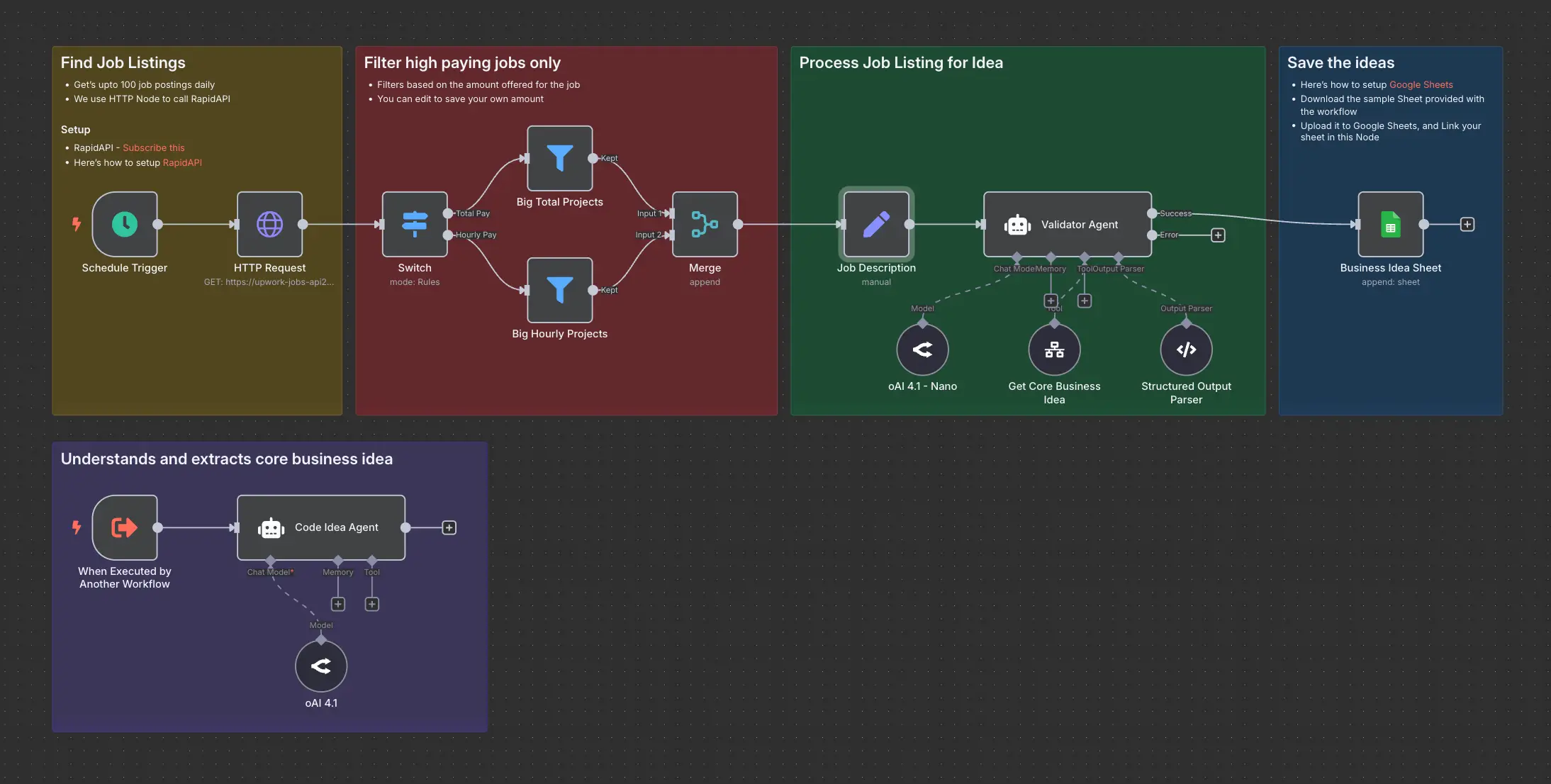
Daily Validated Business Ideas using n8n and Upwork
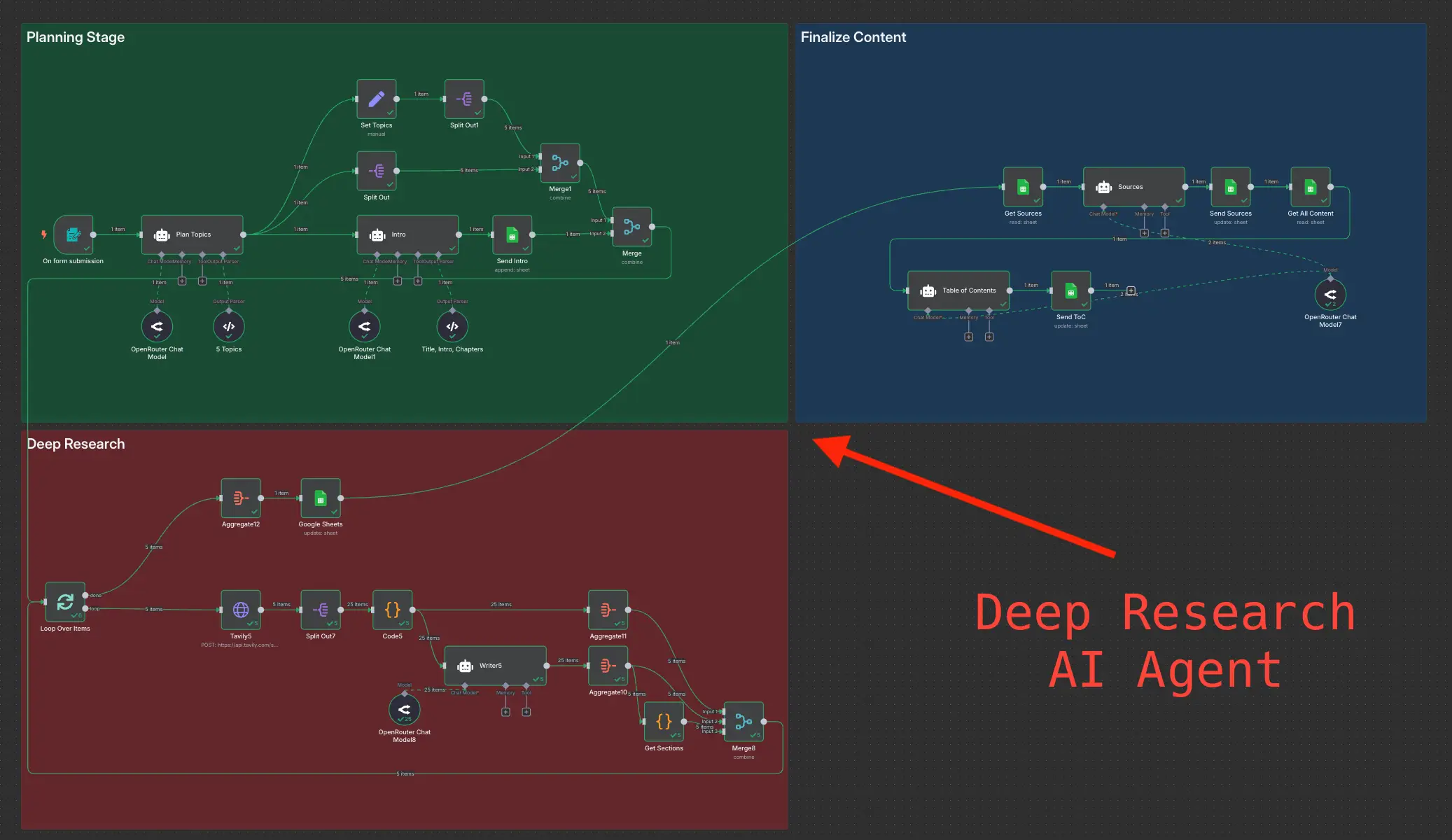
Deep Research using n8n automation to generate report using Tavily