Will AI Take Our Jobs? A Hopeful, Balanced View of Work Ahead


Table of Contents
- Introduction
- Why do so many people worry that AI will take jobs?
- Will AI replace all jobs or reshape what work looks like?
- Which human skills stay valuable as AI gets more capable?
- How can workers and leaders prepare without panic?
- What role do policy, training, and ethics play in a fair transition?
- Is collaboration between people and AI the most realistic path forward?
- Frequently Asked Questions (FAQs)
Introduction
If you have typed "will AI take our jobs" into a search box or asked an assistant late at night, you are in good company. The question is not silly. It is human. Work is how most of us secure dignity, stability, and a sense of contribution. When a new technology moves fast, it is reasonable to ask whether your corner of the economy will still need you in five or ten years.
This article offers an optimistic answer without pretending the path is effortless. For most roles, the more honest forecast is not total replacement but reconfiguration - some tasks automated, others expanded, and new kinds of work appearing around the edges of what machines do well. That is good news for people who are willing to adapt. It is also a serious prompt for employers, educators, and policymakers to share the cost of transition so optimism does not sound like denial.
I write from the perspective of someone who builds with AI daily. Tools can draft code, summarize research, and speed up creative iteration. They still stumble on accountability, messy context, and the judgment calls that make organizations trust a decision. The diplomatic truth is that both the hype and the doom loop oversimplify reality. Your future at work will depend on skills, sector, geography, and how institutions choose to invest in people - not on a single verdict from a headline.
Why do so many people worry that AI will take jobs?
Fear spreads faster than nuance. Headlines about models passing exams or generating video in seconds compress decades of economic change into a single emotional beat. Social feeds reward certainty, so you see blunt claims in both directions: "everyone will be unemployed" or "nothing will change." Neither frame respects how labor markets actually evolve.
There are also legitimate reasons for concern. Some tasks that paid well were already being squeezed by software and global competition. AI can accelerate that squeeze for work that is highly patterned, text-heavy, or easy to specify in a prompt. Customer support triage, first-draft writing, basic coding scaffolds, and parts of legal discovery sit in that zone. If your identity is tied to one narrow slice of those tasks, anxiety is rational.
Another layer is fairness. Even if aggregate employment stays resilient, localized pain is real. A town that loses a category of jobs may not immediately gain new ones. Workers mid-career with mortgages and dependents do not experience averages. They experience their own inbox. Acknowledging that is part of a diplomatic conversation. Optimism that ignores displacement sounds like privilege. Pessimism that denies human adaptability sells short what training and new demand can do.
Are past waves of automation a useful guide?
History does not repeat exactly, but it rhymes. Spreadsheets did not end accounting; they shifted what accountants spent time on. ATMs changed bank branches without deleting banking jobs wholesale. Each wave featured fear, adjustment, and eventually new tasks that were hard to imagine from the old vantage point.
The honest caveat is that this wave may move faster and touch cognitive work more directly than electrification or early robotics did. That is why "we survived past tech" is not a complete argument. It is, however, a reminder that economies rarely freeze in place. Demand for care, craft, governance, education, infrastructure, and creative judgment tends to find people again - often in different packaging than before.
Will AI replace all jobs or reshape what work looks like?
Replacement is easier to dramatize than gradual reshaping, so it dominates the discourse. In practice, employers usually adopt tools to raise output, cut cost on repetitive slices, or improve quality - not to fire everyone on day one. Budgets, regulation, customer trust, and integration work all slow pure automation fantasies.
Many roles will split into three buckets over time. First, tasks that are easy to specify and check may move heavily toward software. Second, tasks that blend ambiguity, relationships, and responsibility will stay human-led, with AI as an assistant. Third, new tasks will appear: prompt and workflow design, model evaluation, data hygiene, human-in-the-loop review, and roles we have not named yet because the products are still young.
None of that guarantees comfort for every individual. It does suggest that "will AI take jobs" is often the wrong level of abstraction. The sharper questions are which tasks in your role are commoditizing, which are compounding in value, and what evidence your industry is already showing.
What is the difference between replacement and augmentation?
Replacement means the machine owns the outcome end to end within acceptable error bounds for the business. Augmentation means the machine accelerates pieces of the pipeline while a person signs off, explains tradeoffs, or handles exceptions.
Most knowledge work today lives in augmentation territory. A developer uses copilots but still architects systems and debugs weird production issues. A marketer uses generators but still picks positioning and measures what resonates. A nurse might use documentation support but still reads the room and advocates for a patient.
The optimistic case is not that augmentation is painless. It is that augmentation expands the ceiling for people who learn to partner with tools - the same way earlier professionals who embraced software outpaced those who insisted on purely manual methods. The diplomatic case is that society should not leave individuals to bear that learning curve alone.
Which human skills stay valuable as AI gets more capable?
Models are strong at pattern completion in text, code, and images. They are weaker where stakes are high, context is incomplete, or someone must be accountable when things go wrong. That maps to a cluster of durable human strengths.
Judgment under uncertainty matters when data is messy and values conflict. Taste and curation matter when infinite generic output is cheap but trust and brand are not. Relationship and negotiation matter wherever incentives differ and empathy changes outcomes. Domain expertise still wins when the right answer depends on regulations, culture, or tacit knowledge that was never written down cleanly.
Communication also rises in importance. Explaining tradeoffs, aligning teams, and translating between technical and non-technical stakeholders are not easily outsourced to a black box. Neither is ethical discernment: deciding what should be built, for whom, and with what safeguards.
If you want a practical lens, ask which parts of your week involve stakes, specificity, and trust. Those are the layers worth investing in while you use AI to compress the repetitive middle.
How can workers and leaders prepare without panic?
For individuals, small steady moves beat dramatic pivots driven by anxiety. Map your tasks for a week. Label what is repetitive, what requires your network, and what requires accountability. Experiment with tools on the repetitive slice so you build fluency without betting your reputation on a single vendor.
Learn to verify outputs the way a senior editor reviews a junior writer. That habit transfers across tools and models. Seek feedback from people who see your work in production, not only from metrics that reward speed.
For leaders, preparation looks like transparency and training budgets, not vague "AI transformation" memos. Name which workflows are piloting automation, what success means, and how roles might evolve. Pair that with time for staff to practice on real tasks. The worst outcome is shadow adoption where people burn out trying to appear fully automated while quality drifts.
Organizations that win tend to treat AI as infrastructure with owners, playbooks, and review - similar to how they treat security or data governance. That is less flashy than a keynote demo, but it is how optimistic futures actually get built.
What role do policy, training, and ethics play in a fair transition?
Technology alone does not decide whether transitions feel just. Policy shapes whether displaced workers get retraining, income support, or portable benefits. Education systems decide whether young people learn how to work with computational tools rather than fear or worship them. Ethics shows up in hiring, surveillance, and how performance is measured when outputs can be partially machine-generated.
A diplomatic stance here is to reject false binaries. Markets and public institutions both have roles. Companies that externalize reskilling costs may save in the short term and pay in turnover, reputation, and brittle operations later. Societies that ignore regional shocks may see polarization rise even if national employment looks fine on a chart.
Optimism anchored in shared responsibility is more credible than optimism that assumes invisible helping hands will sort everything out. The future of work is partly a design problem. We can choose incentives that reward human oversight, safety, and quality - not only raw speed.
Is collaboration between people and AI the most realistic path forward?
For the foreseeable horizon, yes. Fully autonomous organizations are constrained by liability, customer expectations, and the simple fact that someone must own a bad outcome. Even highly automated factories have humans in the loop for maintenance, exceptions, and improvement.
Collaboration also matches how products mature. Early demos sparkle; production systems require evaluation, monitoring, and iteration. People who can steer models - giving constraints, examples, and corrections - become more valuable, not less, as the tools improve. That steering is a skill, not an accident.
The hopeful story, stated carefully, is this: AI can remove drudgery, widen access to expertise-shaped assistance, and let more people participate in creative and analytical work if the economic and educational wiring supports them. The serious story alongside it is that none of that is automatic. Without intentional investment, benefits cluster and harms scatter.
If you remember one line, let it be this: the question is less whether AI will take jobs in the abstract, and more how quickly we help people move toward work that pairs human responsibility with machine leverage. That is a future worth building - and worth discussing without contempt for either technologists or skeptics.
Frequently asked questions
Quick answers on the topics covered in this article.
No credible forecast suggests total job elimination on that timeline. Change will be uneven: some roles will shrink in headcount, others will grow, and many will shift in task mix. The more useful planning horizon is which tasks in your work are automating, not whether work disappears entirely.
Roles heavy on repetitive pattern tasks in text, code, or structured data face more pressure, especially where quality can be checked cheaply. Examples include parts of customer support triage, basic content drafting, simple coding scaffolds, and routine document review. Full roles are less often deleted overnight than reshaped.
Judgment, accountability, relationship building, domain expertise, communication across stakeholders, and ethical decision-making remain hard to outsource. Skills in verifying, editing, and directing AI outputs also compound in value as generic generation becomes cheap.
Unlikely in the near term. Tools accelerate drafting and refactoring, but architecture, debugging novel failures, security, performance, and alignment with business constraints still need human ownership. The job may look more like orchestration and review than typing every line by hand.
Coding is one path, not the only one. Deepen judgment in your domain, improve communication and leadership, learn to use AI assistants on your actual workflows, and build reputation around outcomes only you can sign off on. Combine tool fluency with trust-building skills.
Replacement means the system owns the full outcome within acceptable business error rates. Augmentation means software speeds subtasks while a person remains responsible for decisions, exceptions, and quality. Most knowledge work today is augmented rather than fully replaced.
Both play a role, but broad literacy plus a smaller specialist layer usually scales better. Frontline staff need safe playbooks; specialists handle evaluation, integration, and risk. Training existing teams often preserves domain context that new hires lack.
It can, if access to tools, education, and good jobs diverges. The same technology that helps a motivated individual scale output can widen gaps if only some employers invest in reskilling. Policy and corporate choices matter as much as the models themselves.
Acknowledge the fear as reasonable, share a clear pilot plan with guardrails, explain how roles may evolve rather than making vague promises, and fund time to learn. Morale improves when people see a path, not when they are told to stop worrying.
Yes, if optimism includes preparation and fairness. Technology has historically shifted work more than abolished it, but transitions hurt without support. A credible hopeful view pairs confidence in human adaptability with pressure on institutions to share training and opportunity.
Share this article
Related workflows
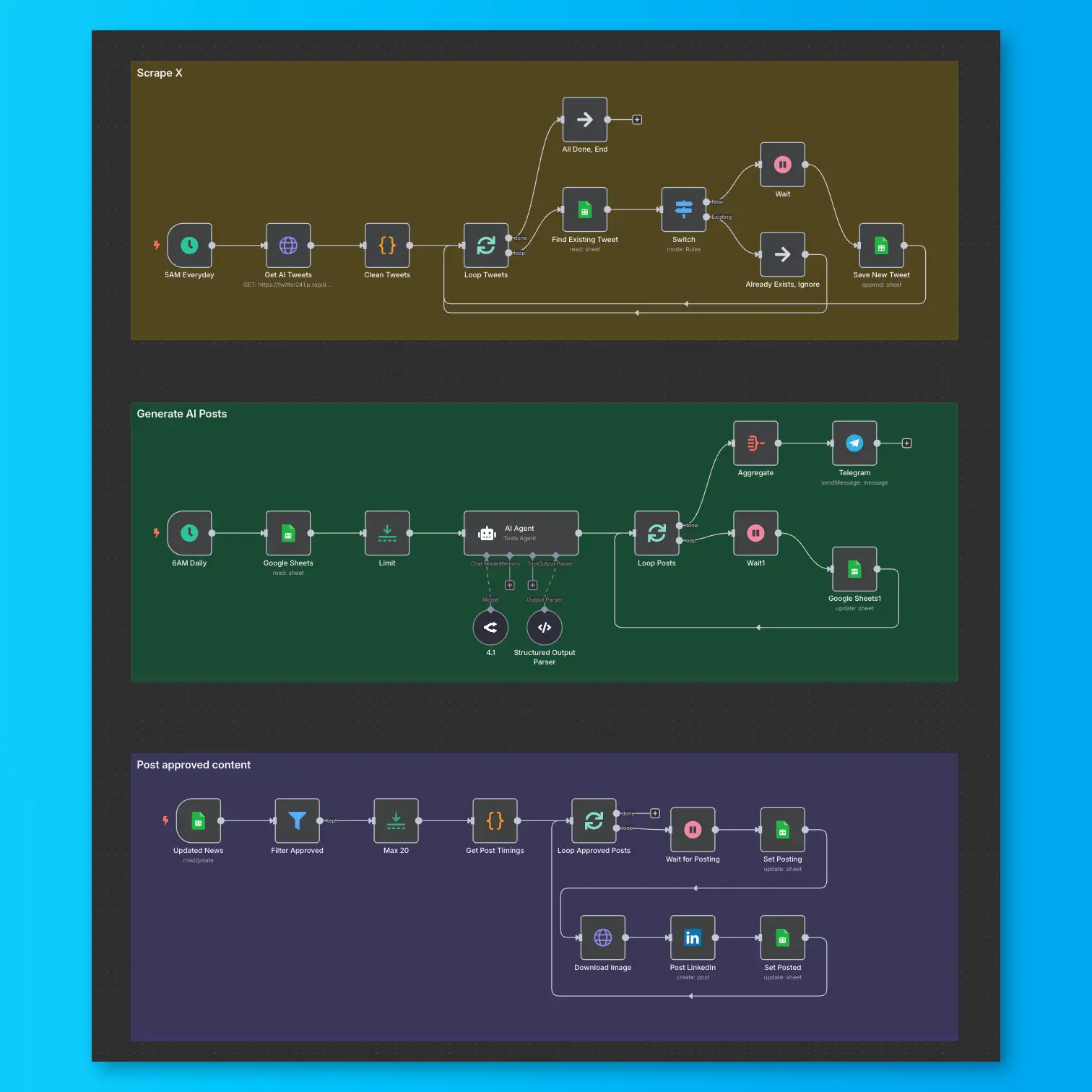
LinkedIn Automation From X Posts
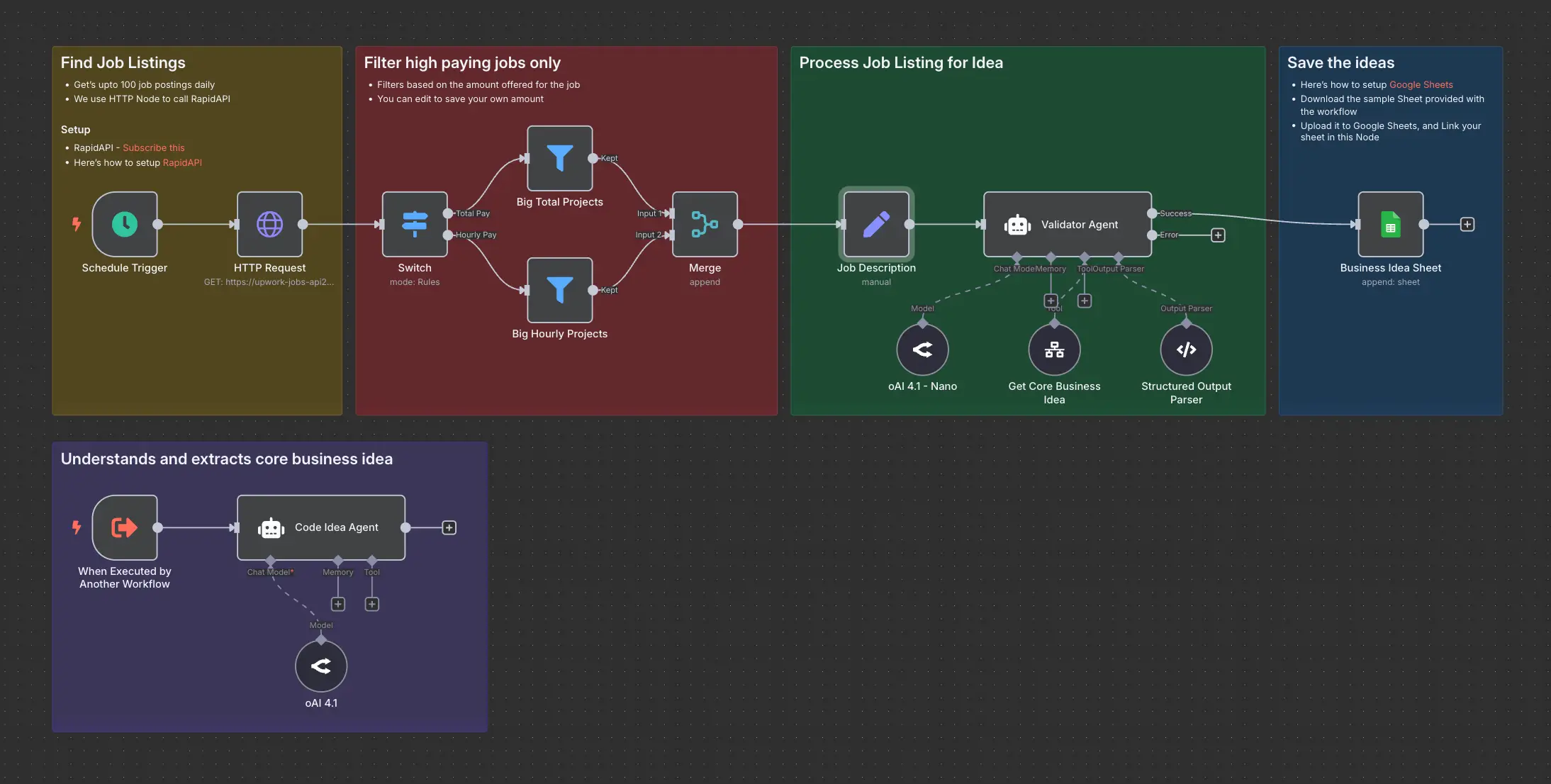
Daily Validated Business Ideas using n8n and Upwork