What is the Claude Fable 5 refusal fallback problem? (2026)
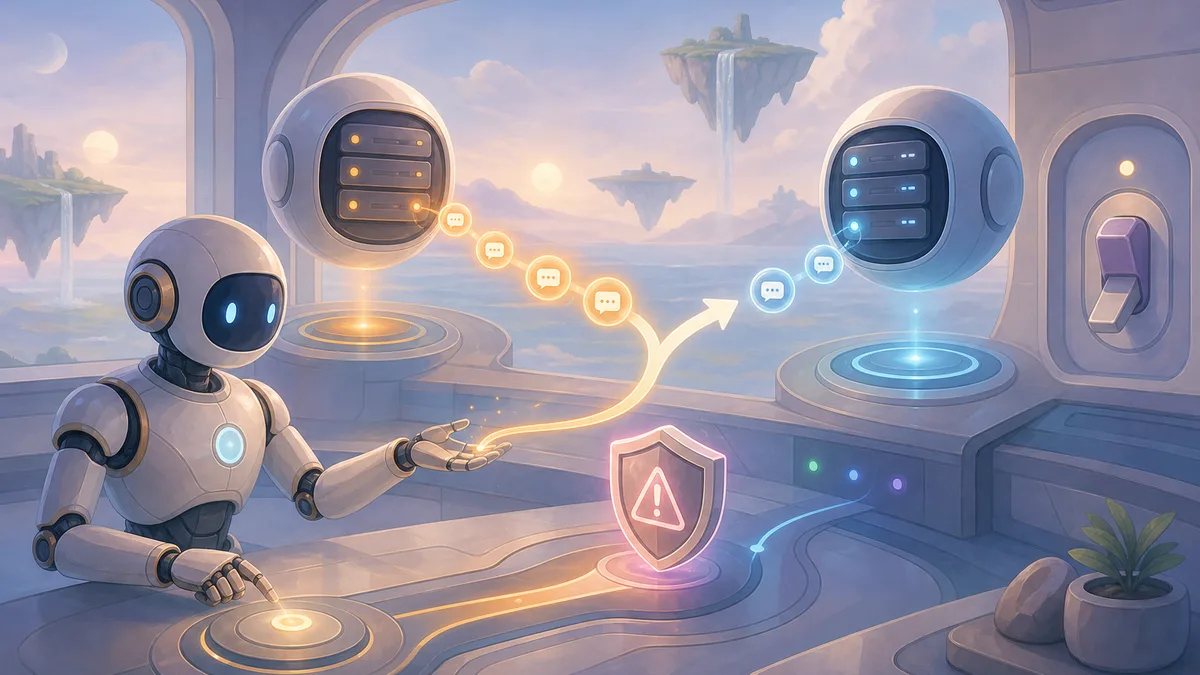

Table of Contents
- Introduction
- What is the Claude Fable 5 refusal fallback problem?
- Why does Claude Fable 5 return a stop_reason refusal?
- How does the silent fallback to Opus 4.8 break production automations?
- What does a Fable 5 refusal look like in the API response?
- Should you use the beta server-side fallback or your own routing?
- Why does no zero data retention option matter for Fable 5?
- How do you handle Fable 5 false positives before rollout?
- When should you not adopt Claude Fable 5?
- What is the action checklist for safe Fable 5 rollout?
- Frequently Asked Questions (FAQs)
Introduction
Claude Fable 5 landed on June 9, 2026 as Anthropic's first generally available Mythos-class model, and the headline is easy to love. It sits above Opus 4.8 for reasoning, long-horizon agent work, coding, vision, and analysis, with gains that grow as tasks get longer and messier. If you run automations, the temptation is obvious: swap in the smarter model and let it carry more of the load.
Here is the part that does not make the launch posts. The thing most likely to break your workflow is not capability. It is a guardrail. Fable 5 ships with safety classifiers that can refuse a request outright, and when they do, the model can quietly fall back to Opus 4.8. Your automation expected one model and one output shape. It got another. Most teams will not notice until a downstream step chokes on a format it did not expect, or a customer gets a reply that reads a little off.
This post is for the people who keep these systems running. I'll walk through how the refusal behaves at the API level, why the silent fallback is the real ship-blocker, how to detect and route around it, and when Fable 5 does not belong in your stack yet. The goal is a calm, boring rollout instead of a surprise incident two weeks after you flip the switch.
What is the Claude Fable 5 refusal fallback problem?
The refusal fallback problem is short to state and annoying to live with. Fable 5 runs safety classifiers on incoming requests. For a narrow set of high-risk categories, the model can refuse to answer. On a refusal, the request can fall back to Opus 4.8 instead of returning nothing. So the same prompt that returned Fable 5 output yesterday can return Opus 4.8 output today, with no error and no crash.
For a chat user, that is fine. A human reads the answer, shrugs, and moves on. For an automation, it is a quiet contract violation. Pipelines are built around assumptions: this model, this quality, this JSON shape, this tone. When the model underneath changes mid-run, those assumptions stop holding, and the failure shows up far from the cause.
The triggers are not random. Anthropic's conservative safeguards fire on high-risk areas like cyber, bio, chem, and reasoning extraction, which covers attempts to distill or reverse-engineer the model. They trigger on average in under 1 percent of sessions but can still catch harmless requests. A manufacturing standard operating procedure, a penetration-test write-up, or a routine email to a lab supplier can all brush a category without any bad intent. Under 1 percent sounds tiny until it lands on a run that touches money or a customer.
So the problem is not "the model is unsafe." It is "the model occasionally substitutes itself for a different model, silently, on inputs you did not flag as risky." If your system cannot see that substitution happen, you cannot reason about your own output quality.
Why does Claude Fable 5 return a stop_reason refusal?
Fable 5 refuses because Anthropic built classifier-based safeguards into the model for categories where misuse carries real-world harm. The current set covers cyber, bio, chem, and reasoning extraction. When the classifier decides a request belongs to one of those buckets, the model stops rather than produces a full answer.
The key thing to internalize is that this is not a normal completion that happens to say no. It is a distinct stop state. The API returns an HTTP 200, not an error, and sets stop_reason to "refusal". Alongside it you get a stop_details object naming the category that fired, such as cyber, bio, or reasoning_extraction. That is your signal. If you only check for HTTP errors, you will sail right past a refusal because the transport layer thinks everything is fine.
There is a small upside worth noting for cost: refusals that happen before any output is generated are not billed. So a spike in refusals will not run up your bill, but it will degrade your results if you are falling back. A gap between requests sent and tokens billed can even hint at refusal volume.
It helps to separate two ideas. Capability is "can the model do this." Policy is "will the model do this." Fable 5's refusals are a policy decision encoded as a model behavior. You cannot prompt your way out of a true category hit, and you should not try. The right move is to detect the policy state and decide what your system does next on purpose.
How does the silent fallback to Opus 4.8 break production automations?
The fallback breaks things because it changes the model without telling the parts of your system that care. Opus 4.8 is excellent, but it is not Fable 5. It reasons differently on long or complex tasks, and that difference shows up in subtle ways that automations are bad at tolerating.
Start with format drift. If you tuned prompts so Fable 5 returns a specific JSON structure, a strict field order, or a precise tone, Opus 4.8 may return something close but not identical. A parser expecting an exact schema can throw, or worse, accept malformed data and pass it downstream. Now you have a bad record in your CRM, a wrong number in a report, or a draft email that never should have gone out.
Then there is quality drift on the hard tasks, which is exactly where you chose Fable 5 in the first place. The model's advantage grows with task complexity, so the longest agent runs and the gnarliest analyses are where the gap between Fable 5 and the fallback is widest. Those are also the runs where a quiet downgrade is hardest to catch by eye.
The deeper issue is observability. A silent fallback gives you no error to alert on and no log line that says "different model answered this." Unless you inspect stop_reason and record which model produced each result, you are flying blind. Two weeks later someone asks why a batch of outputs looks inconsistent, and you have no trail to explain it. That is the difference between a controlled degradation and a mystery incident.
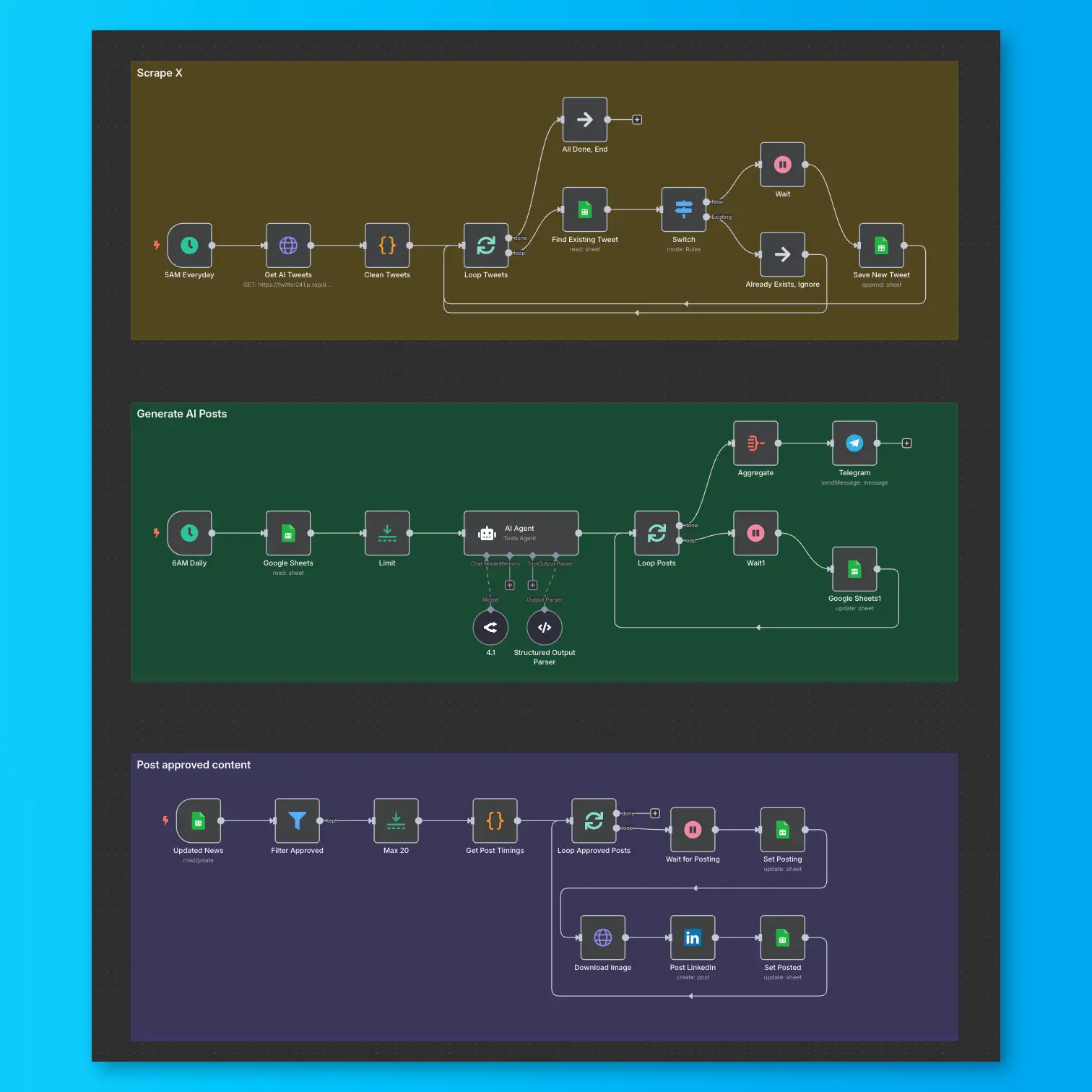
If you orchestrate this in a tool like n8n, the fix is mostly discipline: capture the model and stop reason on every call, branch on refusals, and never let a fallback pass through unlabeled. The orchestration layer is where you make the invisible visible.
What does a Fable 5 refusal look like in the API response?
A refusal is an ordinary-looking 200 response with two tells. The first is stop_reason: "refusal". The second is a stop_details object that names the triggered category. Treat both as first-class signals in your code, the same way you treat a status code.
Here is the shape to watch for:
{
  "id": "msg_...",
  "type": "message",
  "model": "claude-fable-5",
  "stop_reason": "refusal",
  "stop_details": { "type": "refusal", "category": "cyber" },
  "content": []
}
The practical handling is simple. After every call, read stop_reason. If it equals refusal, do not treat the empty or partial content as a real answer. Log the stop_details category, increment a per-category counter, and route to your fallback policy. Record which model actually answered so a downgraded result is never mistaken for a Fable 5 result.
A few integration notes save pain later. The model id is claude-fable-5 on the Claude API and anthropic.claude-fable-5 on AWS Bedrock, with a Vertex AI variant too. Fable 5 is available on the Claude API, AWS, Vertex AI, and Microsoft Foundry. The handling logic above is the same everywhere, but the convenient server-side fallback is not.
Should you use the beta server-side fallback or your own routing?
You have two ways to handle a refusal: let Anthropic retry it for you, or do the routing yourself. Both are valid. The right call depends on how much control and visibility you need.
The beta server-side fallback is the easy path. You send a beta header, server-side-fallback-2026-06-01, and a refused request is retried server-side to Opus 4.8 in a single round trip. Less code, lower latency, fewer moving parts. The catch is availability: it works only on the Claude API and the Claude Platform on AWS. It is not available on Bedrock, Vertex AI, Microsoft Foundry, or Message Batches. So if your infrastructure lives on Bedrock or Vertex, this option is off the table and you must handle refusals yourself.
Explicit routing in your own code is more work but gives you the control automations actually want. You see the refusal, you decide the fallback model, and you log everything. The table below lays out the trade-off.
| Dimension | Beta server-side fallback | Your own routing |
|---|---|---|
| Setup effort | Low (one beta header) | Higher (custom logic) |
| Availability | Claude API + Claude Platform on AWS only | Anywhere you call the API |
| Visibility into which model answered | Limited unless you check the response | Full, you control logging |
| Fallback target | Opus 4.8 | Any model you choose |
| Batch support | Not on Message Batches | Yes, if you build it |
My default for anything that touches revenue, customers, or compliance is explicit routing. The few hours of extra code buy you a deterministic, observable system. Reserve the beta fallback for low-stakes, internal workflows where a quiet downgrade is genuinely fine.
Why does no zero data retention option matter for Fable 5?
Zero data retention, or ZDR, is the setting that prevents your prompts and outputs from being stored. At launch, Fable 5 does not offer a ZDR option. For a lot of business automations that single line decides whether the model is even allowed in the stack.
If you process regulated or sensitive data - health information, financial records, legal documents, anything covered by a customer contract or a compliance regime - the absence of ZDR is not a nuance, it is a wall. Your data protection agreements may simply forbid sending that content to a model without retention controls. The model can be the best on every benchmark and still be disqualified by a procurement checkbox.
This is also why a blanket "upgrade everything to Fable 5" plan is risky. You might have ten workflows where Fable 5 is perfect and two where it is legally off-limits. Treating the decision per workflow, not per company, is the difference between a clean rollout and a compliance problem. The honest summary: do not put Fable 5 on anything that needs zero data retention today. Map your sensitive flows first, fence them off, and let Fable 5 earn its place where retention is not a constraint.
How do you handle Fable 5 false positives before rollout?
A false positive is a refusal on a harmless request. Because the safeguards are conservative, they will occasionally flag content that is perfectly legitimate. The under 1 percent number is real, but so is the long tail of normal business content that happens to brush a category.
Think about what your automations actually read. A pentest report can look like cyber. A manufacturing SOP or a chemical safety sheet can look like chem. An email to a lab supplier or a research abstract can drift toward bio. None of these involve bad intent, and all are common in real workflows. If your agent processes that kind of text, you will hit false positives eventually.
The way to handle this is to test before you trust. Pull a representative sample of real inputs - especially anything in or near security, infrastructure, health, or chemistry - and run them through Fable 5 in staging before production. Count the refusals, note which categories fire, and decide whether the rate is acceptable. A 0.3 percent refusal rate on internal summaries is a shrug. The same rate on outbound customer replies is a problem, because each refusal is a customer who got a worse answer.
Then instrument for the long run. Log every refusal with its category, alert on refusal spikes, and keep a deterministic fallback model so a flagged request still completes in a known way. A spike usually means a new kind of input entered the pipeline, and you want to know within minutes, not at the next retro.
When should you not adopt Claude Fable 5?
Not every workflow should move to Fable 5, and a few should stay away entirely. Knowing where it does not fit is as valuable as knowing where it shines.
Skip Fable 5 on simple workflows. If a task is short, well-defined, and already handled by a cheaper model, you gain little from a top-tier model that costs roughly twice Opus 4.8 - around $10 per million input tokens and $50 per million output. Paying premium prices for routine classification or short replies is waste.
Avoid it on anything ZDR-sensitive. If retention controls are part of your compliance posture, Fable 5's launch configuration does not qualify, full stop.
Be cautious on anything that regularly brushes the refusal categories. If your automation routinely processes security, infrastructure, health, or chemistry-adjacent content, you are signing up for a steady trickle of refusals and fallbacks. That is fine if you have built the detection and routing, and painful if you have not. Decide deliberately rather than discovering it in production.
One note on the Mythos 5 framing, so it does not confuse the decision. Mythos 5 is the same model with safeguards lifted for specific, vetted use such as cyber work under government programs and select bio researchers. It is not a general business option, so the standard Fable 5 behavior - refusals and optional fallback - is what you plan around.
What is the action checklist for safe Fable 5 rollout?
If you do decide Fable 5 belongs in a given workflow, here is the short, practical sequence to ship it without surprises.
- Detect refusals explicitly. After every call, check
stop_reasonfor"refusal"and never treat a refused response as a valid answer. - Log the category. Record the
stop_detailscategory on each refusal so you can see whether cyber, bio, chem, or reasoning extraction is firing, and how often. - Choose your fallback strategy on purpose. Use the beta server-side fallback for low-stakes flows where it is available, or build explicit routing for anything that touches revenue, customers, or compliance.
- Record which model answered. Tag every output with its producing model so a downgraded result is never mistaken for a Fable 5 result.
- Keep a deterministic fallback model. Make sure a refused request still completes in a known, predictable way.
- Test for false positives before rollout. Run a representative sample, especially security, infrastructure, health, and chemistry content, through staging and measure the refusal rate.
- Alert on refusal spikes. Treat a sudden rise as an incident signal worth investigating within minutes.
- Keep Fable 5 off ZDR-sensitive paths. Map sensitive flows first and fence them off until retention support exists.
That is the whole game: make the invisible visible, decide fallback behavior deliberately, and respect the compliance boundaries. Do those three things and Fable 5 becomes a controlled upgrade instead of a source of mystery incidents.
The harder question is upstream of all this: should Fable 5 be in your stack at all, and where should each workflow route instead? That is a strategy decision, not just an engineering one.
If you want a clear answer for your specific setup, book a 45-minute AI roadmap call at /roadmap-call. We'll review your workflows, decide whether Fable 5 earns a place, map where refusals and retention rules would bite, and lay out where to route each task. You leave with a concrete plan instead of a guess.
Frequently asked questions
Quick answers on the topics covered in this article.
It is the behavior where Fable 5's safety classifiers refuse a request in a high-risk category, and the request can then fall back to Opus 4.8 instead of returning nothing. For chat users it is invisible. For automations it means the model underneath your workflow can change without an error, which can shift output quality and format.
A refusal returns an HTTP 200 with stop_reason set to "refusal" and a stop_details object naming the triggered category. Check stop_reason after every call. If you only watch for HTTP errors, you will miss refusals entirely because the transport layer reports success.
The conservative safeguards fire on high-risk areas: cyber, bio, chem, and reasoning extraction (attempts to distill the model). They trigger on average in under 1 percent of sessions but can still catch harmless requests, such as a pentest report, a manufacturing SOP, or an email to a lab supplier.
Refusals that happen before any output is generated are not billed. So a spike in refusals will not run up your bill, but it can quietly degrade your results if you are silently falling back to another model.
It is an option that retries a refused request server-side to Opus 4.8 in a single round trip. You enable it with the beta header server-side-fallback-2026-06-01. It is available only on the Claude API and the Claude Platform on AWS, not on Bedrock, Vertex AI, Microsoft Foundry, or Message Batches.
Use the beta server-side fallback for low-stakes, internal workflows where a quiet downgrade is fine. Use your own explicit routing for anything that touches revenue, customers, or compliance, because it gives you full control over the fallback model and complete logging of which model answered.
No. There is no zero data retention option at launch. If your workflow processes regulated or sensitive data under retention controls, keep it off Fable 5 until ZDR support is added, regardless of how well the model performs.
The safeguards trigger on average in under 1 percent of sessions, but that small rate still catches some harmless requests. Content in or near security, infrastructure, health, and chemistry is most likely to be flagged, so test those inputs in staging before going live.
It depends on the task. Fable 5 costs roughly twice Opus 4.8 and its advantage grows on long, complex work, so it is worth it there. For simple, short, well-defined tasks already handled by a cheaper model, the premium is usually wasted.
Detect refusals by checking stop_reason, log the category, choose a fallback strategy on purpose, record which model answered, keep a deterministic fallback, test for false positives before launch, alert on refusal spikes, and keep ZDR-sensitive paths off Fable 5. That turns a silent risk into a controlled upgrade.
Share this article
Related workflows