Claude for Small Business: Plugins vs Custom Workflows (2026)


Table of Contents
- Introduction
- What is Claude for small business and how does Claude Cowork automation work?
- Which connectors and ready-to-run workflows ship at launch?
- When is Claude for small business the fastest path for finance and revenue ops?
- When should you not rely on Claude for small business alone?
- How do approve-before-send guardrails protect payroll, invoices, and sales outreach?
- How does Claude for small business compare to n8n, Make, and MCP CRM patterns?
- How should you rank finance vs revenue automations on a roadmap call?
- What does a practical 30-day rollout look like?
- Frequently Asked Questions (FAQs)
Introduction
On May 13, 2026, Anthropic launched Claude for small business: a toggle inside Claude Cowork that connects Claude to the apps owners already run (QuickBooks, PayPal, HubSpot, Canva, DocuSign, Google Workspace, Microsoft 365) and ships about 15 ready-to-run workflows plus matching skills for payroll planning, month-end close, invoice chasing, lead triage, and campaign prep. Nothing sends, posts, or pays until a human approves.
That is a real shift from "chat in a tab." It is also not a replacement for custom workflow engines, MCP servers, or consultant-led architecture when your business is multi-brand, regulated, or running CRM logic the prebuilt flows cannot express.
This guide is for owners and ops leads with buying power: when the plugin fits, when you still need custom CRM and MCP patterns, when to DIY n8n vs hire, and how to map and rank your build order so finance and revenue automations land in the right sequence.
What is Claude for small business and how does Claude Cowork automation work?
Claude for small business is not a separate product SKU sitting beside Claude chat. You turn it on inside Claude Cowork, connect the tools you use, pick a job, and Claude works across those systems with your existing permissions. If someone cannot see a QuickBooks report or Drive folder today, they cannot see it through Claude either.
Claude Cowork automation here means agentic workflows: Claude plans steps, calls connector APIs, drafts outputs, and stops at approval gates before customer-facing or money-moving actions execute. That is closer to a trained ops teammate than a Zap that fires on a single field change.
Anthropic frames the gap it is closing honestly: small businesses drive a large share of GDP and employment, but AI adoption often stalls at the browser because tools were built for enterprise IT, not for an owner closing books at midnight. Cowork plus connectors targets the pile-up work (payroll confidence, overdue invoices, campaign assets) without asking you to become an integration engineer first.
Which connectors and ready-to-run workflows ship at launch?
Per the launch announcement, day-one connectors include:
| Connector | Typical jobs inside Claude |
|---|---|
| Intuit QuickBooks | Payroll planning, month-end close, cash position, tax-season prep, reconciliation |
| PayPal | Settlements, invoicing, disputes, refunds |
| HubSpot | Lead triage, customer pulse, campaign attribution |
| Canva | On-brand creative, collaboration, publish and track |
| DocuSign | Send for signature, track status, file executed copies |
| Google Workspace | Docs, mail, calendar context in flows |
| Microsoft 365 | Same for teams on the Microsoft stack |
Anthropic ships 15 workflows and 15 skills across finance, operations, sales, marketing, HR, and customer service. Examples from the announcement:
- Payroll with confidence - reconcile QuickBooks cash against PayPal settlements, build a 30-day forecast, rank overdue items, queue reminders for approval.
- Month-end close - reconcile books to settlements, flag mismatches, write plain-English P&L, export a close packet for your accountant.
- Business pulse - scheduled one-pager: cash, sales trend, pipeline movement, weekly commitments.
- Campaign run - find a slow revenue stretch, review HubSpot performance, draft promo strategy, generate Canva assets for the next send.
Additional named flows include invoice chaser, margin analyzer, month-end prepper, tax-season organizer, contract reviewer, lead triager, and content strategist. The full skill list lives on Anthropic's solutions page; treat the public list as the contract for what is supported out of the box.
Training ships alongside tools: AI Fluency for Small Business (with PayPal) and a Claude SMB tour starting May 14, 2026 in Chicago. Tools without fluency still die in the chat window, so budget time for staff, not only connector setup.
When is Claude for small business the fastest path for finance and revenue ops?
You get the quickest win when pain is volume and communication, not exotic branching.
Finance-first fits are strong when:
- Overdue invoices and vendor follow-ups eat hours but rules are simple (who is late, what tone, which account).
- Month-end is mostly reconciliation and narrative for your accountant, not multi-entity consolidation.
- You already live in QuickBooks and PayPal; Claude can read positions and draft actions without a middleware project.
Revenue-first fits work when:
- HubSpot holds pipeline truth and the bottleneck is consistent follow-up after quotes, demos, or quiet accounts.
- Marketing needs on-brand assets fast; Canva inside the flow beats exporting briefs to a designer for every promo.
- Your team wants Claude to propose emails and tasks, not auto-send cold outreach.
Single-brand service firms, DTC stores with one entity, and consultancies with one CRM and one voice are the sweet spot. Claude generalizes across customers because policies and tone do not change per subsidiary.
If your stack matches the connector list, you can skip rebuilding invoice-chase logic in Make before you see value. That is the honest case for adoption, not hype.
When should you not rely on Claude for small business alone?
Prebuilt workflows are opinionated. They encode "how a competent ops manager would behave" for a single brand, single region, standard SMB stack. They are the wrong only layer when your reality needs custom routing, audit depth, or systems outside the connector map.
What breaks when you run multi-brand, regulated, or custom CRM logic?
Multi-brand or multi-entity
- Different legal entities, invoice templates, bank accounts, or brand voices per line of business.
- Routing that depends on product line, region, or customer tier with different approval chains.
- Separate HubSpot portals or QuickBooks companies where one workflow must never cross wires.
Regulated or residency-sensitive operations
- Healthcare, financial advice, legal, or public-sector data where you must prove jurisdiction, retention, and per-flow audit trails.
- EU personal data at scale where self-hosted orchestration and documented data paths are non-negotiable.
- Environments where "managed SaaS connector" is not yet acceptable to your auditor without a formal DPIA.
Custom CRM and revenue logic
- Stage models, scoring, and handoffs that do not match HubSpot defaults.
- CPQ, custom objects, or partner portals that prebuilt lead triage cannot see.
- Flows that must call internal APIs, legacy ERP, or a data warehouse Claude's package does not touch.
In those cases, keep Claude for drafting and judgment inside Cowork, but put deterministic routing, deduplication, and cross-system sync in n8n, Make, or code. For CRM glue beyond copy-paste, see stop copy-pasting between Claude and your CRM. When risk is high or capacity is low, DIY vs consultant matters more than another AI toggle.
How do approve-before-send guardrails protect payroll, invoices, and sales outreach?
Anthropic's trust story centers on three ideas: you initiate tasks, permissions mirror today, and Team/Enterprise plans do not train on your data by default (see their Trust Center for plan specifics).
Operationally, approve-before-send means:
- Claude prepares payroll reminders, invoice chases, contract packets, or HubSpot follow-ups.
- A human reviews plan and drafts before anything sends, posts, or pays.
- You can graduate to more end-to-end runs only when a workflow has proven safe.
That pattern is how you avoid the early automation failure mode: confident wrong tone, wrong customer tier, or a discount that should never have left the building. Train staff to treat outputs as proposals, not truth. Escalate edge cases to a manager instead of speed-approving.
Run new flows in shadow mode for two weeks: let Claude draft what you would have done manually, compare, log misses, then tighten instructions. You are tuning prompts and policies, not node graphs, which non-technical owners can own, but discipline still applies.
How does Claude for small business compare to n8n, Make, and MCP CRM patterns?
| Layer | Best for | Weak at |
|---|---|---|
| Claude for small business | LLM-native finance/revenue comms inside listed connectors, human-in-loop | Multi-brand rules, unsupported apps, strict residency |
| n8n / Make | Event triggers, branching, hundreds of nodes, self-host option (n8n) | Judgment, tone, messy unstructured input |
| MCP (custom) | Read/write CRM with scopes you define, cross-tool context in Claude Desktop | Building and maintaining servers, governance |
Claude's package is a productized coworker for common SMB apps. n8n is infrastructure you shape. MCP is your integration contract when HubSpot-in-Cowork is not enough or you run Pipedrive, a custom stack, or draft-only email tools.
The winning pattern is hybrid:
- Claude Cowork for invoice chase, follow-up drafts, close narrative, campaign creative when connectors match.
- n8n for Meta lead capture, dedupe, SLA timers, and multi-step sync your CRM package does not cover.
- MCP when reps still paste CRM exports into chat; give Claude live read and guarded write instead.
Do not duplicate the same flow in Claude and n8n without ownership. Pick Claude-first (reasoning + approve) or workflow-first (deterministic + optional AI step) per process.
How should you rank finance vs revenue automations on a roadmap call?
Tool sprawl kills ROI when every pain point becomes a pilot. Use a short map, score, rank pass (full framework):
- Map 10-15 recurring workflows across finance and revenue.
- Score each on volume, friction (tabs, paste steps), and risk if wrong.
- Rank into now / next / later with implementation style noted.
Practical default for many SMBs after the May 2026 launch:
| Priority bucket | Often Claude-first | Often workflow-first |
|---|---|---|
| Finance | Invoice chase, close narrative, cash pulse | Multi-entity reconciliation, custom ERP posting |
| Revenue | Post-meeting follow-up drafts, renewal nudges, campaign briefs | Ad-to-CRM capture, SLA routing, partner lead rules |
If finance and revenue automations are competing for the same quarter, book a 45-minute roadmap call at /roadmap-call. Bring your stack map and three broken handoffs. You leave with a ranked backlog and a clear split between Claude Cowork, n8n, and MCP so the next build sprint starts from evidence, not another tool trial.
What does a practical 30-day rollout look like?
Week 1 - Scope and connect
- Enable Claude for small business in Cowork for one function (finance or revenue, not both).
- Connect only QuickBooks + PayPal or HubSpot + Canva first; least privilege.
- Pick one prebuilt workflow (invoice chaser or lead triager).
Week 2 - Shadow mode
- Run approvals on every draft; log wrong customer, tone, or amount.
- Document what still requires manual export (custom reports, non-HubSpot CRM).
Week 3 - One custom gap
- If multi-step routing appeared, prototype one n8n flow for capture or sync; do not rebuild what Claude already does.
- If copy-paste to CRM persists, read MCP patterns and scope read-only tools before writes.
Week 4 - Rank and commit
- Score remaining backlog; schedule roadmap call if finance vs revenue order is still contested.
- Assign owners for re-auth, approval discipline, and weekly spot checks.
Anthropic also offers fluency training and tour workshops; treat them as change management, not a substitute for internal rules on who may approve sends.
Frequently asked questions
Quick answers on the topics covered in this article.
It is an Anthropic package (May 13, 2026) that turns on inside Claude Cowork, connects Claude to tools like QuickBooks, PayPal, HubSpot, Canva, DocuSign, Google Workspace, and Microsoft 365, and provides about 15 approve-before-send workflows for common SMB finance and revenue tasks.
Cowork runs agentic workflows across connected apps with your existing permissions, not isolated chat. Claude can plan payroll steps, draft invoice reminders, or prep HubSpot follow-ups in context, then wait for your approval before sending or paying.
QuickBooks, PayPal, HubSpot, Canva, DocuSign, Google Workspace, and Microsoft 365 are named in the launch post, with workflows spanning finance, ops, sales, marketing, HR, and support.
No by default for customer-facing or money-moving actions. You approve plans and drafts first; you can allow more end-to-end runs only after a workflow proves reliable on your data.
When you use the listed connectors, run a single brand, and pain is high-volume follow-ups and admin (invoices, close narrative, pipeline nudges) rather than complex multi-entity rules.
Skip relying on it alone for multi-brand routing, strict regulatory residency, custom CRM objects, or systems outside the connector set. Layer n8n, Make, MCP, or consultant-led design instead.
Claude handles reasoning-heavy communication inside supported apps with human approval. n8n and Make handle event-driven sync, branching, and apps Claude does not connect to. Use both with clear ownership per workflow.
If HubSpot-in-Cowork covers your CRM needs and reps do not paste exports into chat, maybe not yet. If you use other CRMs, need draft-only email tools, or custom write guardrails, MCP patterns still apply.
Score by volume, friction, and mistake cost. Many SMBs start finance (invoice chase, close packet) when cash timing hurts, or revenue (follow-ups, campaigns) when pipeline leakage hurts. Rank both on a roadmap call if they compete for the same quarter.
Use the map-score-rank guide, then book a 45-minute AI roadmap call to order finance vs revenue automations and choose Claude-first vs workflow-first implementation for each pain point.
Share this article
Related workflows
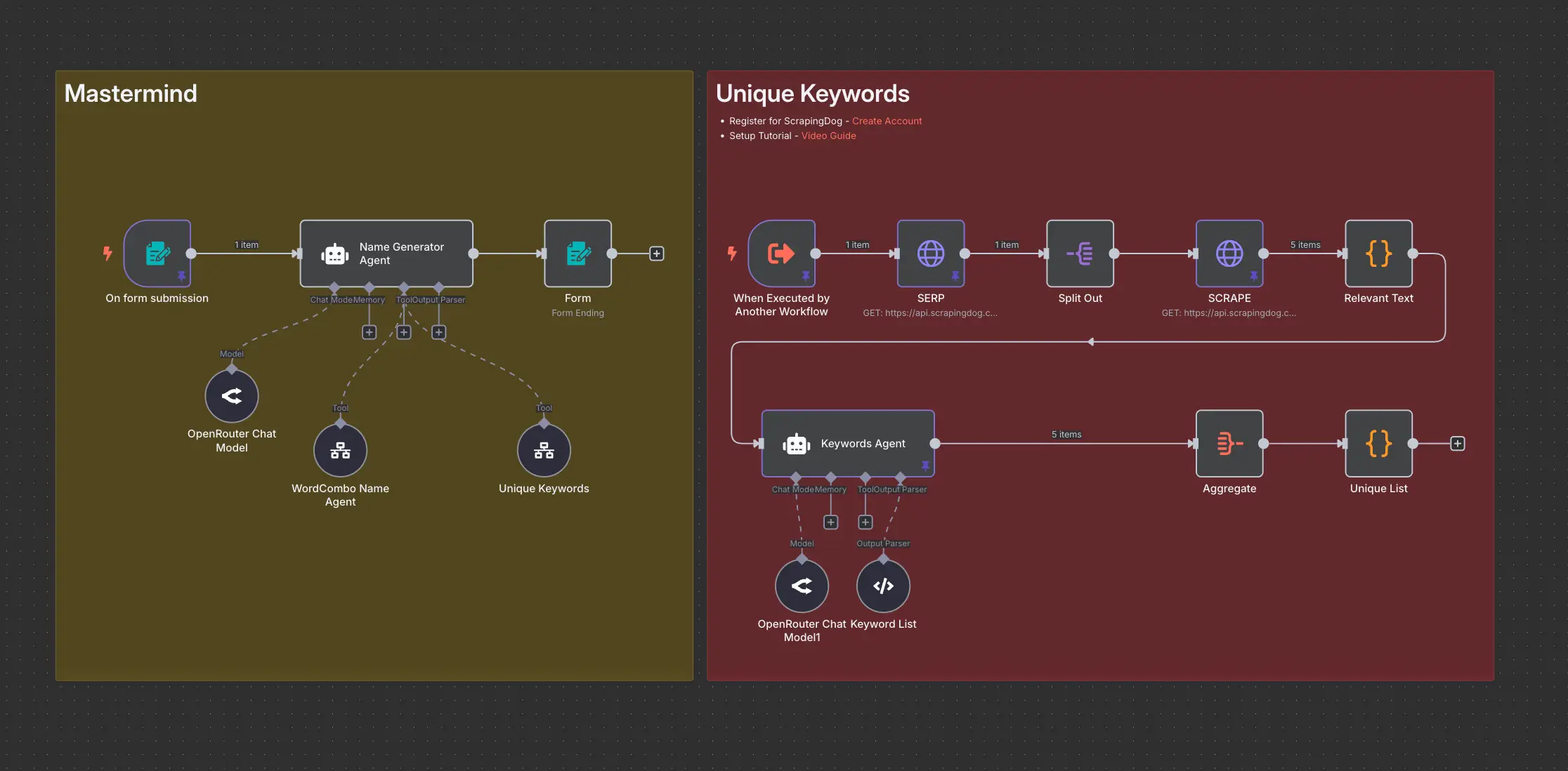
Domain Name Generator n8n workflow using ScrapingDog