Deal Closed in CRM: Why Customers Wait 3 Days to Hear (2026)
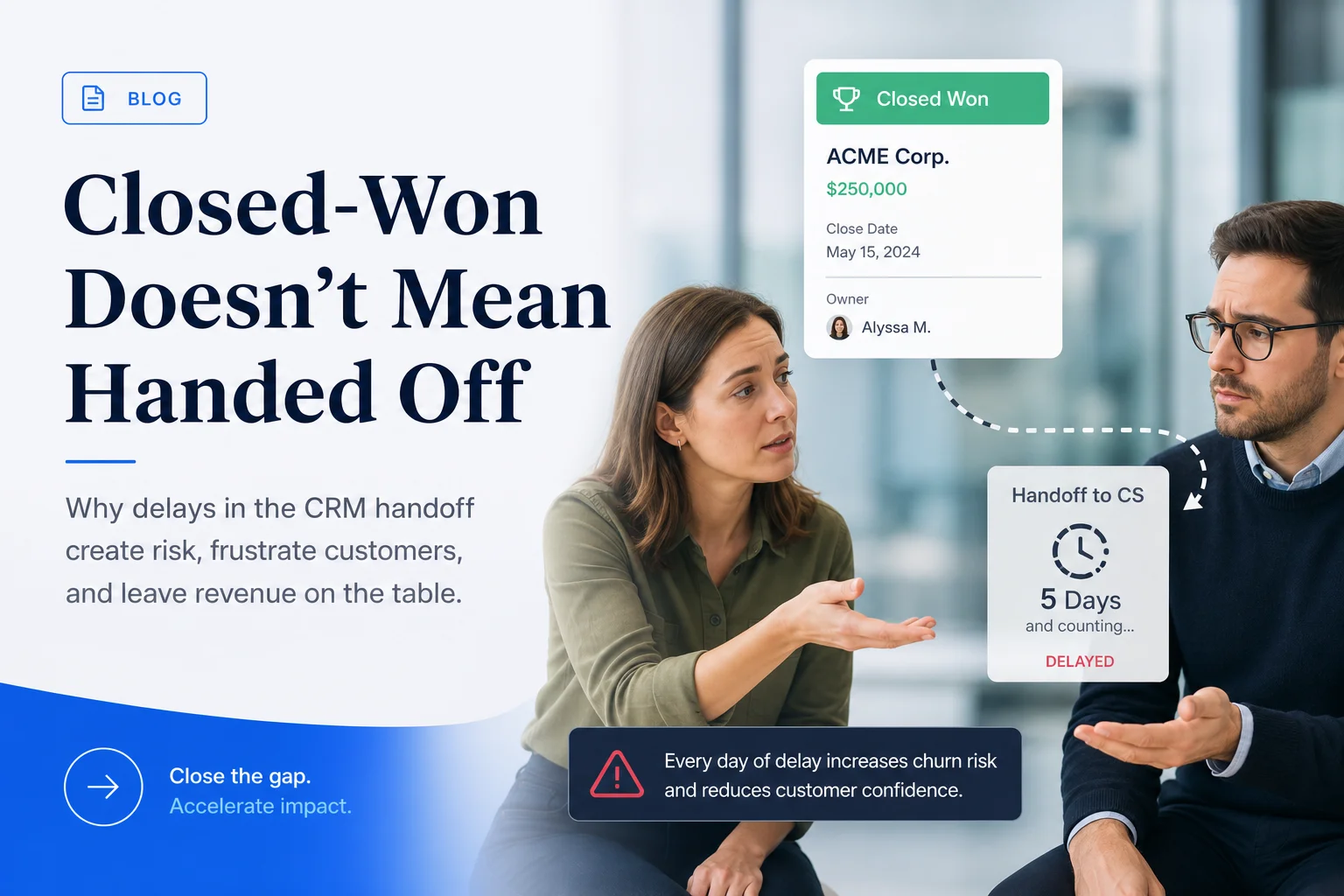

Table of Contents
- Introduction
- Why do customers wait three days after closed won in your CRM?
- What breaks when sales marks closed won Friday and CS finds out Monday?
- How do you map the closed-won to onboarding handoff chain?
- How does stack-agnostic closed won onboarding automation work?
- What goes in an AI kickoff packet with human-approved comms?
- Which systems need synchronized updates after closed won?
- How do you rank closed-won handoff vs lead response automation?
- What daily and weekly checklists keep customer handoff automation healthy?
- When should you book a roadmap call to map your handoff chain?
- Frequently Asked Questions (FAQs)
Introduction
The moment a deal moves to Closed Won should be the high point of your go-to-market motion. In many small businesses, it is the start of an awkward silence instead.
Sales marks the deal closed at 4:47 p.m. on Friday. The customer signs, pays, and goes into the weekend feeling excited. Customer success does not see it until Monday. Project setup waits until someone has time. The welcome email goes out days late. Billing and CRM records fall out of sync. By the time the customer hears from you, their excitement has cooled and doubt has crept in.
This is a customer handoff automation small business problem, not a sales problem. The rep did their job. Nobody owned what happens in the next sixty minutes after the stage change.
If your team is still the glue between CRM, Slack, spreadsheets, and project tools, you already know the pattern from the other direction. See your team is the API between CRM, Slack, and spreadsheets for the internal version of the same failure. This post is about the customer-facing cost: delayed onboarding, broken trust, and slower time-to-value.
The fix is closed won onboarding automation that works regardless of whether you run HubSpot, Pipedrive, or Salesforce. One trigger. One orchestration layer. An AI-generated kickoff packet with human-approved comms. Synchronized updates across CRM, project management, billing, and Slack.
Why do customers wait three days after closed won in your CRM?
Customers wait because the Closed Won stage change is just a field update in your CRM, not a trigger for a defined cross-functional process.
Small businesses grow tool-by-tool. Sales gets a CRM. CS gets a project board. Finance gets billing software. Someone creates a Slack channel manually when they remember. Each tool works for its owner. Nobody designed the handoff between them.
RevOps frameworks in 2026 stress end-to-end lifecycle workflows, yet most 5-30 person teams never document what should happen in the first hour after a deal closes. Sales marks Closed Won quickly. CS checks deals Monday. Finance handles invoices separately. The customer experiences a vacuum.
Three days is not arbitrary. It is Friday close plus a weekend plus Monday morning inbox triage. Without closed won onboarding automation, that delay is the default state.
What breaks when sales marks closed won Friday and CS finds out Monday?
When the handoff is manual and asynchronous, four systems drift apart almost immediately.
Welcome email timing. The customer signed and expects confirmation. Your template sits in someone's queue until Monday. Competitors who respond same-day look more professional by comparison.
Project board lag. Implementation tasks do not exist until CS manually creates them. The customer asks "what happens next?" and gets "we are setting things up."
Slack silence. Your internal channel for the account does not exist. Sales context from the final call lives in the rep's head or a scattered note field. CS starts cold.
Billing mismatch. Finance may not know the deal closed. Contract terms in the CRM do not match the subscription record. Someone discovers the gap during the first invoice run.
Each failure is small on its own. Together they signal disorganization at the exact moment the customer decided to trust you with their money.
The same pattern appears earlier in the funnel when a verbal yes does not produce a sent proposal for days. If that sounds familiar, read you said yes on the call but the proposal is still a draft. Post-sale silence is the mirror image: the customer already said yes, and you still go quiet.
How do you map the closed-won to onboarding handoff chain?
Before you wire automation, draw the chain from Closed Won to kickoff complete. Sit with sales, CS, and finance for thirty minutes and document:
- Trigger event - deal stage becomes Closed Won (define exactly when: contract signed, payment received, or both).
- Immediate outputs - internal notifications, customer welcome, project creation, billing setup.
- Milestones - welcome sent, kickoff scheduled, workspace live, billing confirmed.
- Owner transitions - sales to onboarding to ongoing CS, with timing SLAs at each step.
- Completion state - customer in Active or Onboarding status with a live project plan.
Draw boxes for systems, arrows for data flows, names on each arrow. A typical small-business chain:
- CRM Closed Won - sales updates stage and required fields.
- Internal alert - CS and implementation notified in Slack or email.
- Project creation - tasks and template applied in Asana, Monday, or ClickUp.
- Customer comms - welcome email and kickoff scheduling link sent.
- Billing - subscription or invoice created with correct terms.
- CRM update - onboarding status, project link, and billing ID written back.
Document exceptions too. Enterprise deals with custom SOWs. Multi-stakeholder accounts needing separate billing contacts. Those become human-review branches in your automation, not reasons to keep everything manual.
If you need a prioritization lens once the map exists, what to automate first helps rank this handoff against lead response and support deflection.
How does stack-agnostic closed won onboarding automation work?
The architecture is the same whether you use HubSpot, Pipedrive, Salesforce, n8n, or Make. Four layers.
Layer 1: Tighten the Closed Won gate with required fields (package, term, contacts, implementation notes) so half-baked closes cannot break downstream steps.
Layer 2: CRM trigger via HubSpot workflows, Salesforce Flow, or Pipedrive automations when stage equals Closed Won. Complex multi-system hops call a webhook to your orchestration layer.
Layer 3: Orchestration in n8n or Make - pull deal context, assign owners by segment, coordinate parallel actions.
Layer 4: Human approval on customer-facing drafts before send. Machines coordinate; humans own the relationship.
# Example webhook payload shape your orchestrator receives
{
  "event": "deal.closed_won",
  "crm": "hubspot",
  "deal_id": "12345",
  "company": "Acme Corp",
  "package": "Growth",
  "owner_email": "cs@yourcompany.com"
}
Start with one product line or segment. Prove the flow. Expand to variants. This mirrors the phased build order in too many automation tools: map, score, rank.
What goes in an AI kickoff packet with human-approved comms?
The kickoff packet is the structured summary CS needs to run a strong first conversation without re-interviewing the customer.
An AI step (Claude, GPT, or similar) generates the packet from CRM fields, call notes, and email threads. A human reviews and approves before anything customer-facing goes out.
Internal kickoff packet contents:
- Company overview and decision-maker map.
- What was sold: package, price, term, start date.
- Stated goals from the sales process.
- Risks or objections raised during the sales cycle.
- Technical requirements or integrations mentioned.
- Suggested first-week milestones.
Customer-facing drafts (human-approved before send):
- Welcome email referencing specific goals from the sales conversation.
- Kickoff scheduling link with proposed agenda.
- What to expect in week one (plain language, no jargon).
The approval step is non-negotiable. AI drafts save thirty minutes of prep. Humans catch wrong package names, outdated pricing, and tone mismatches. If you want a lighter-weight version before full orchestration, Claude Projects for onboarding SOPs can hold templates and packet structure without another SaaS seat.
Summarize this closed-won deal for customer success onboarding.
Include: company context, what was sold, stated goals, risks raised,
technical requirements, and a 3-bullet week-one plan.
Use only facts from the provided CRM fields and notes. Flag anything missing.
Which systems need synchronized updates after closed won?
A reliable handoff updates four systems in parallel, then writes confirmation back to the CRM.
| System | What gets created or updated | Owner |
|---|---|---|
| CRM | Onboarding status, project link, billing ID, kickoff date | RevOps / automation |
| Project management | Template tasks, milestones, assigned owners | CS / implementation |
| Billing | Subscription or invoice with correct terms and contacts | Finance |
| Slack | Internal channel with deal summary and links | Automation + CS |
CRM write-back matters most. If the project URL and billing subscription ID live only in Slack, you lose auditability. The CRM should reflect onboarding progress so reporting stays honest.
Error handling belongs in the orchestration layer. If project creation fails but billing succeeds, alert a human immediately. Silent partial success is worse than no automation.
Idempotency prevents duplicate projects when someone toggles the deal stage twice. Key automations on deal ID, not on every field change.
How do you rank closed-won handoff vs lead response automation?
Not every team should build closed-won onboarding first. Rank it against your other revenue leaks.
| Automation candidate | Typical leak signal | When to prioritize |
|---|---|---|
| Lead response (form to first reply) | Leads go cold within hours | High inbound volume, long sales cycles |
| Closed-won handoff | Customer silence after signing | Growing CS load, renewal risk |
| Support deflection | Same tickets repeat weekly | Support queue growing faster than revenue |
| Quote/proposal speed | Verbal yes to sent proposal gap | Long deal cycles, competitive markets |
Score each on frequency, error cost, and revenue impact. Closed-won handoff scores high on error cost (churn, bad reviews, slow time-to-value) but lower on frequency than lead response in high-volume inbound businesses.
If leads are dying in your CRM over the weekend, fix that first. If leads are fine but new customers complain about onboarding delays, closed-won automation is your highest-leverage move. Many teams need both, sequenced by leak score, not by which problem is loudest in today's standup.
What daily and weekly checklists keep customer handoff automation healthy?
Automation decays without operating rhythm. Two checklists keep customer handoff automation small business flows trustworthy.
Daily checklist (10-15 minutes)
- Review overnight Closed Won deals - Confirm each triggered automation, welcome sent within SLA, project created, billing record exists.
- Check failed automation logs - n8n, Make, or CRM workflow error queue. Triage before CS discovers gaps from customers.
- Spot-check one kickoff packet - Read the AI summary against CRM notes. Tune prompts if facts are wrong or missing.
- Verify CRM write-back - Project link and billing ID populated on yesterday's closes.
- Log manual overrides - Any deal CS handled outside automation (custom SOW, unusual terms). Feed patterns back into rules.
Weekly checklist (30-45 minutes)
- SLA review - Median time from Closed Won to welcome sent and kickoff scheduled. Target: same business day.
- Exception patterns - Which deal types broke automation? Add rules or human-review branches.
- Cross-functional handoff walkthrough - Pick one recent close. Trace CRM to project to billing to customer inbox. Note drift.
- Prompt and template updates - Adjust AI kickoff packet prompts based on CS feedback.
- Republish process docs - Closed Won field requirements, SLA expectations, who approves customer comms.
This cadence plugs into standard RevOps weekly reviews. Onboarding bottlenecks deserve the same attention as lead bottlenecks.
When should you book a roadmap call to map your handoff chain?
You do not need a six-month integration project to fix the Friday-to-Monday gap. You do need a clear map of what should happen in the first hour after Closed Won and a ranked build order against your other revenue leaks.
A focused session delivers:
- Handoff chain map - from CRM stage change through project, billing, Slack, and customer comms.
- Leak scoring - closed-won handoff ranked against lead response, support deflection, and quote speed.
- Stack-agnostic architecture - trigger, orchestration, AI packet, human approval, synchronized updates.
- 90-day build sequence - what to wire first based on your actual tools and team capacity.
Reserve your roadmap call if customers are signing on Friday and hearing from you on Tuesday. The deliverable is a handoff chain map and a prioritized path to closed won onboarding automation - not another tool subscription.
Frequently asked questions
Quick answers on the topics covered in this article.
The Closed Won stage change updates a CRM field but does not trigger a defined cross-functional process. Without automation, CS discovers new customers on their own schedule - often Monday morning - while welcome emails, project boards, and billing setup wait for manual action.
Closed won onboarding automation is a stack-agnostic workflow that fires when a deal reaches Closed Won in your CRM. It creates project tasks, drafts customer communications, sets up billing, notifies your team in Slack, and writes status back to the CRM - with human approval on anything customer-facing.
CRM workflow emails send templated messages from one system. Customer handoff automation coordinates multiple systems (CRM, project management, billing, Slack) in parallel, generates context-aware kickoff content from deal data, and enforces SLAs across sales, CS, and finance.
HubSpot, Salesforce, and Pipedrive all support stage-change triggers and webhooks. The CRM matters less than having required fields enforced at close and an orchestration layer (native workflows or n8n/Make) for multi-system actions.
Both work. Use native CRM workflows for simple one-system notifications. Use n8n or Make when you need parallel updates across three or more systems, AI-generated kickoff packets, error handling, and CRM write-back in one flow.
Company context, what was sold, stated goals from sales, risks or objections raised, technical requirements, and a suggested week-one plan. AI drafts from CRM fields and notes; a human reviews before any customer-facing communication sends.
Include billing record creation in the same automation flow as project setup. Write the billing subscription or invoice ID back to the CRM. Alert a human immediately if billing creation fails while other steps succeed.
Score both on frequency, error cost, and revenue impact. Prioritize lead response if inbound volume is high and leads go cold quickly. Prioritize closed-won handoff if customers complain about post-sale silence and renewal risk is rising.
Most small businesses target same business day: welcome email within four hours of Closed Won, kickoff scheduled within one business day. Document the SLA, measure it weekly, and build automation to enforce it.
Book when you cannot agree on build order, when systems drift after every close, or when you need help ranking closed-won handoff against lead response and support deflection.
Share this article
Related workflows
Daily Validated Business Ideas using n8n and Upwork
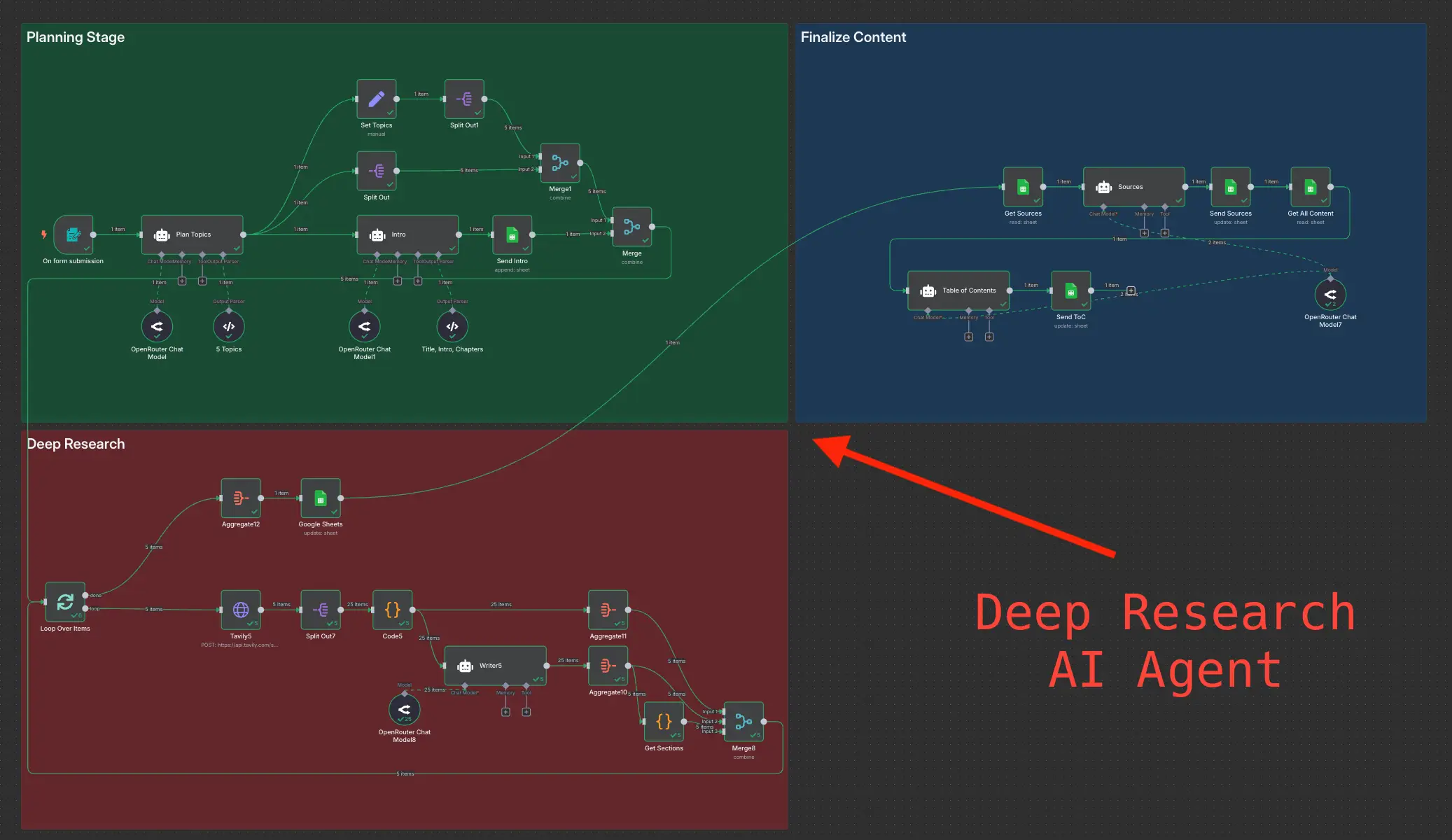
Deep Research using n8n automation to generate report using Tavily