What Should Your Automations Run on if GPT-5.6 Sol Is Gated? (2026)

Table of Contents
- Introduction
- What did OpenAI announce about GPT-5.6 Sol on June 26, 2026?
- Why is GPT-5.6 Sol limited to government-approved preview partners?
- How is government-gated AI model access different from a normal API launch?
- What is the practical fallback stack for GPT-5.6 Sol business automation?
- Should you rebuild WhatsApp bots on a gated GPT-5.6 Sol API?
- When should you wait for GPT-5.6 vs adopt Terra, Luna, or Claude today?
- How do you avoid replatforming on preview-only frontier models?
- What does a 30-day model-portability checklist look like?
- Frequently Asked Questions (FAQs)
Introduction
On June 26, 2026, OpenAI shipped the GPT-5.6 family - Sol, Terra, and Luna - and immediately locked the flagship behind a government-limited preview. If your team was planning to replatform lead routing, support triage, or document extraction onto Sol because the benchmarks looked unbeatable, you are staring at the same class of risk that hit Anthropic customers two weeks earlier when Claude Fable 5 went offline under export-control pressure.
This post is for founders and ops leads who need a GPT-5.6 Sol business automation plan that does not bet the revenue stack on a model you cannot call yet. You will get a portable fallback stack (Claude Opus, Sonnet, Haiku, plus orchestration in n8n), clear rules for when to wait versus adopt, and a hard no on replatforming WhatsApp bots onto gated frontier APIs. If mapping dependencies feels urgent, there is a link to book a short call at the end.
What did OpenAI announce about GPT-5.6 Sol on June 26, 2026?
OpenAI's June 26 announcement introduced three models in one series, not a single upgrade.
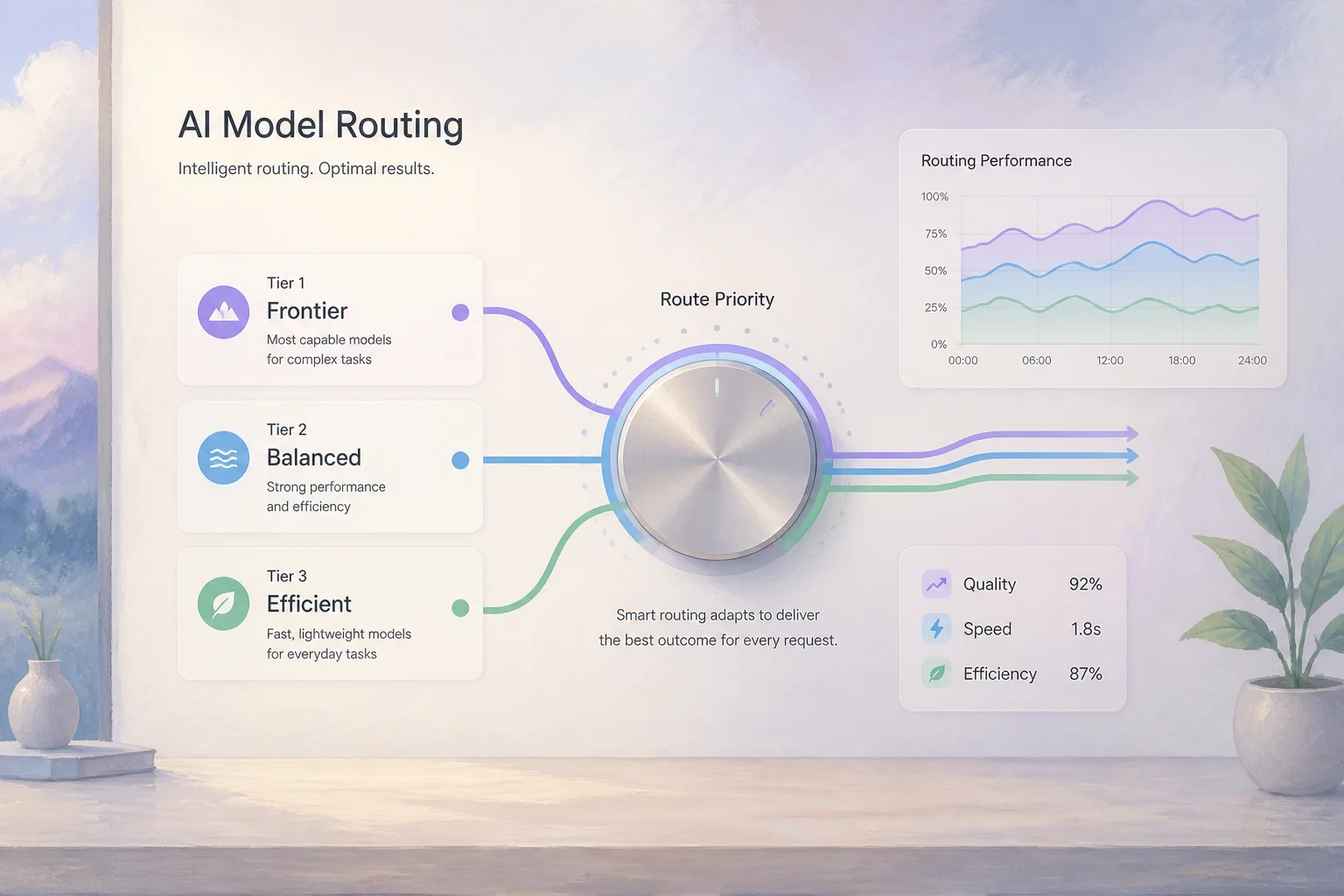
GPT-5.6 Sol is the frontier flagship. OpenAI positions it for agentic coding, biology, and cybersecurity work, with layered safety controls and a published system card. Terra is the balanced everyday model - OpenAI says it matches GPT-5.5-class performance at roughly half the price. Luna is the fast, low-cost tier for high-volume tasks.
Pricing per million tokens breaks down as follows:
| Model | Input | Output |
|---|---|---|
| Sol | $5 | $30 |
| Terra | $2.50 | $15 |
| Luna | $1 | $6 |
Sol is priced for high-value agent work, not commodity text generation. Terra and Luna are the models most production automations will eventually run on once general availability opens.
The catch: on launch day, all three start in a limited preview for API and Codex access only. OpenAI says it plans to make Sol, Terra, and Luna broadly available to ChatGPT, Codex, and API customers in the coming weeks. Until then, if you are not on the approved partner list, you cannot integrate Sol into live workflows - no matter how ready your prompts are.
Why is GPT-5.6 Sol limited to government-approved preview partners?
The preview exists because the U.S. government asked for it, not because OpenAI ran out of GPU capacity.
OpenAI states it previewed release plans and model capabilities with the administration ahead of launch. At the government's request, the first rollout goes to a small group of trusted partners whose participation has been shared with the government before broader release. Reporting puts the initial cohort at roughly twenty organizations, with customer-by-customer approval during the preview window.
This sits on top of a June 2, 2026 executive order that directs federal agencies to develop a process for benchmarking new AI models with advanced cyber capabilities. OpenAI frames the preview as a short-term step while it works with the administration on a cyber executive-order framework and a repeatable release process. The company also says plainly it does not want government access process to become the long-term default.
For business operators, the why matters less than the pattern. Frontier models are now release candidates for policy review, not just product launches. That is the same environment that produced the Claude Fable 5 global suspension on June 12 - a directive aimed at foreign-national access that became a full shutdown because real-time nationality verification on every API call was not feasible. Sol is gated rather than banned, but the lesson rhymes: do not hard-code your ops stack to a headline model the government can narrow or remove.
How is government-gated AI model access different from a normal API launch?
A staged research preview is normal. Government-conditioned access is new operational risk.
In a typical launch, any paying API customer can flip a model string, run evals, and promote to production on their timeline. With GPT-5.6 Sol, access is contingent on being a vetted partner during a politically visible window. OpenAI also warns that safeguards may intervene on legitimate dual-use work during the preview - defensive and offensive cyber activity can look similar at first pass - which means even approved partners are testing policy behavior, not just model quality.
Three differences land on your backlog:
- You cannot reproduce prod on Sol today unless you are in the preview cohort. Demos built on Sol will not match what most customers can ship for weeks.
- Availability is a policy variable, not only an uptime SLA. A model can be technically ready and still unreachable for your account tier or jurisdiction.
- Precedent stacks. Fable 5 proved models can disappear overnight. Sol proves new frontier releases can start behind a gate. Together they argue for model portability as a first-class architecture requirement.
Treat gated frontier APIs like beta features with regulatory tail risk - exciting for R and D, dangerous as the sole engine behind WhatsApp lead response or invoice parsing.
What is the practical fallback stack for GPT-5.6 Sol business automation?
Your production stack in late June 2026 should assume Sol is optional, not foundational. Build on models you can call today and orchestrate so swapping tiers takes minutes, not a sprint.
Layer 1 - Orchestration (n8n or equivalent). Put business logic in workflows that call internal functions, not raw model endpoints scattered across Zapier steps and one-off scripts. n8n (or Make, or a thin internal API) holds retries, branching, CRM writes, and human approval gates. The model is one node, not the architecture. If you are new to this pattern, the n8n registration path is a reasonable starting point before you wire customer-facing flows.
Layer 2 - Model tiers mapped to tasks.
| Task type | Run on today | When GPT-5.6 GA opens |
|---|---|---|
| High-volume routing, dedupe, form normalize | Claude Haiku or GPT-4.1 mini class | Luna |
| Drafts humans edit (support, proposals) | Claude Sonnet or GPT-5.5 | Terra |
| Complex extraction, multi-doc reasoning | Claude Opus 4.8 or GPT-5.5 | Sol for edge cases only |
Layer 3 - Provider diversity. Anthropic stayed online through the Fable suspension for Opus, Sonnet, and Haiku. OpenAI's GPT-5 and GPT-5.5 remain broadly available and already support multimodal and tool-use patterns Sol extends. Pick a primary and a secondary provider per capability, not per vendor religion.
Layer 4 - Config, not code. Store model IDs in one file or environment block:
{
  "lead-qualify": {
    "primary": "claude-sonnet-4",
    "fallback": "gpt-5.5"
  },
  "invoice-extract": {
    "primary": "claude-opus-4-8",
    "fallback": "claude-sonnet-4"
  }
}
When Terra or Luna reach your account, you change config - not twenty workflows.
Should you rebuild WhatsApp bots on a gated GPT-5.6 Sol API?
No. Do not replatform customer-facing WhatsApp automations onto Sol while it sits in a government-limited preview.
WhatsApp Business API flows are hard to unwind. Meta template approvals, 24-hour session windows, opt-in rules, and webhook SLAs mean you pay a high migration tax every time you change the brain behind the bot. If Sol access is uncertain for your org, you risk building on an API tier you cannot scale to production - or losing access if policy shifts mid-rollout.
Use stable, broadly available models for live WhatsApp qualify-and-route flows: Sonnet or Haiku for classification and draft replies, Opus only where human review already sits in the path. Keep the same orchestration patterns described in the WhatsApp time-to-lead KPI post and WhatsApp AI chatbot rules guide. Pilot Sol on internal batch jobs - contract summarization, log analysis, code review - where a outage is annoying, not a Meta policy incident.
The rule is simple: customer channels get boring, portable models. Frontier previews stay in the lab.
When should you wait for GPT-5.6 vs adopt Terra, Luna, or Claude today?
Wait (but do not idle) if your only blocker is Sol-specific agentic coding or cyber reasoning and GPT-5.5 plus Opus already covers eighty percent of the workflow. Use the preview window to harden orchestration, approval gates, and fallbacks - not to pause automation roadmaps.
Adopt now on Terra-class and Luna-class equivalents:
- Terra maps to GPT-5.5 or Claude Sonnet for everyday automation - summaries, CRM updates, moderate code generation. If 5.5 already works, you are not missing Terra; you are waiting for a price cut.
- Luna maps to Haiku or small OpenAI models for high-volume classify-and-route steps.
- Sol should enter production only after GA on your account, a week of side-by-side evals on real inputs, and a tested downgrade path to Opus or 5.5.
If you are choosing between waiting for Sol and fixing a broken Fable dependency, stop waiting on any frontier headline. The Fable 5 recovery playbook still applies: swap model strings, monitor KPIs, centralize config. Sol arriving later is an upgrade slot, not a reason to defer revenue fixes.
How do you avoid replatforming on preview-only frontier models?
Teams replatform on preview models for the same reason they once hard-coded Fable 5 during a four-day launch window: the benchmark chart is seductive and the migration plan is vague.
Four guardrails prevent a repeat:
- No production dependency without GA on your billing account. Pilots use feature flags; customers do not.
- Every workflow documents primary, fallback, and human path before launch. If fallback is "call Sol harder," you do not have a fallback.
- Cap frontier spend. Sol at $30 per million output tokens adds up fast on agent loops. Route bulk work to Luna-class models by default.
- Review quarterly for single-model concentration. If more than one critical workflow shares one model ID with no gateway, you have a bus factor of one policy letter.
Read OpenAI's system card and release notes when Terra and Luna open up, but make go/no-go decisions on your data - malformed JSON rates, escalation volume, time-to-first-reply - not launch-blog charts.
What does a 30-day model-portability checklist look like?
Days 0-3: inventory. List every automation that calls an LLM. Note model ID, owner, customer-facing or internal, and what breaks if the model vanishes. Flag anything still on Fable 5 or waiting on Sol.
Days 3-10: stabilize on available tiers. Point live workflows at Sonnet, Opus 4.8, or GPT-5.5. Run fifty real inputs per workflow; log JSON parse failures and human edit rates.
Days 10-20: gateway or shared client. Wrap model calls behind one module or n8n sub-workflow. Enforce schema validation before CRM or ERP writes.
Days 20-30: policy and pilot boundary. Write a one-page rule: frontier previews never power WhatsApp, payments, or unsupervised customer send. Schedule a Sol eval sandbox for after GA - not before.
If the order of operations is unclear, use the what to automate first framework to rank by revenue impact.
GPT-5.6 Sol is a capability jump, but June 2026 is a governance jump too. The teams that win treat Sol like an optional accelerator behind portable orchestration - not the foundation they rebuild every time access rules change.
If you want help mapping which automations should stay on Claude today, where GPT-5.5 is enough, and how to wire n8n fallbacks before Sol opens broadly, book a 45-minute AI roadmap call. We will rank what to fix first so you are not betting WhatsApp revenue on a gated preview.
Frequently asked questions
Quick answers on the topics covered in this article.
GPT-5.6 Sol is OpenAI's frontier flagship for agentic coding, biology, and cybersecurity. Terra is the balanced everyday model with GPT-5.5-class performance at lower cost. Luna is the fast, affordable tier for high-volume work. All three launched June 26, 2026, but started in a limited government-coordinated preview before general availability.
OpenAI coordinated the launch with the U.S. government after previewing capabilities in advance. At the government's request, initial API and Codex access is limited to a small group of trusted partners whose participation was shared with the administration. OpenAI plans broader ChatGPT, Codex, and API access in the coming weeks.
Reporting describes roughly twenty trusted partners in the first cohort, with customer-by-customer approval during the preview. Exact membership is not public, but if you were not contacted as a partner, assume you cannot call Sol in production yet.
Use a portable stack: orchestration in n8n (or similar), Claude Haiku or Sonnet for most live workflows, Opus 4.8 or GPT-5.5 for harder reasoning, and centralized model config with tested fallbacks. Do not block revenue fixes waiting for Sol.
They are different events with the same lesson. Fable 5 was suspended globally on June 12 under export-control pressure. Sol is gated at launch on June 26 under government-coordinated preview rules. Both show frontier model access can change for policy reasons, not only outages.
No. WhatsApp Business API flows are expensive to migrate and tightly regulated. Use broadly available models (Claude Sonnet or Haiku, GPT-5.5) for customer-facing WhatsApp automation until Sol is generally available on your account and tested with fallbacks.
OpenAI says it plans general availability in the coming weeks for ChatGPT, Codex, and API users after the preview. Industry reporting points to mid-to-late July 2026, but treat dates as estimates and ship on models you can call today.
Sol costs $5 per million input tokens and $30 per million output tokens. Terra costs half that ($2.50 / $15). Luna costs $1 / $6. Most production automations should default to Terra- or Luna-class economics, not Sol, once GA opens.
A thin layer - shared code module, internal API, or n8n sub-workflow - that routes tasks to a primary model and retries on a secondary model if the first fails or is unavailable. Downstream systems see one schema regardless of provider.
Book a roadmap call if you have multiple workflows waiting on Sol, customer-facing channels at risk, or no inventory of which automations hard-code frontier model IDs. A ranked 30-day portability plan beats replatforming twice when access rules shift again.
Share this article
Related workflows
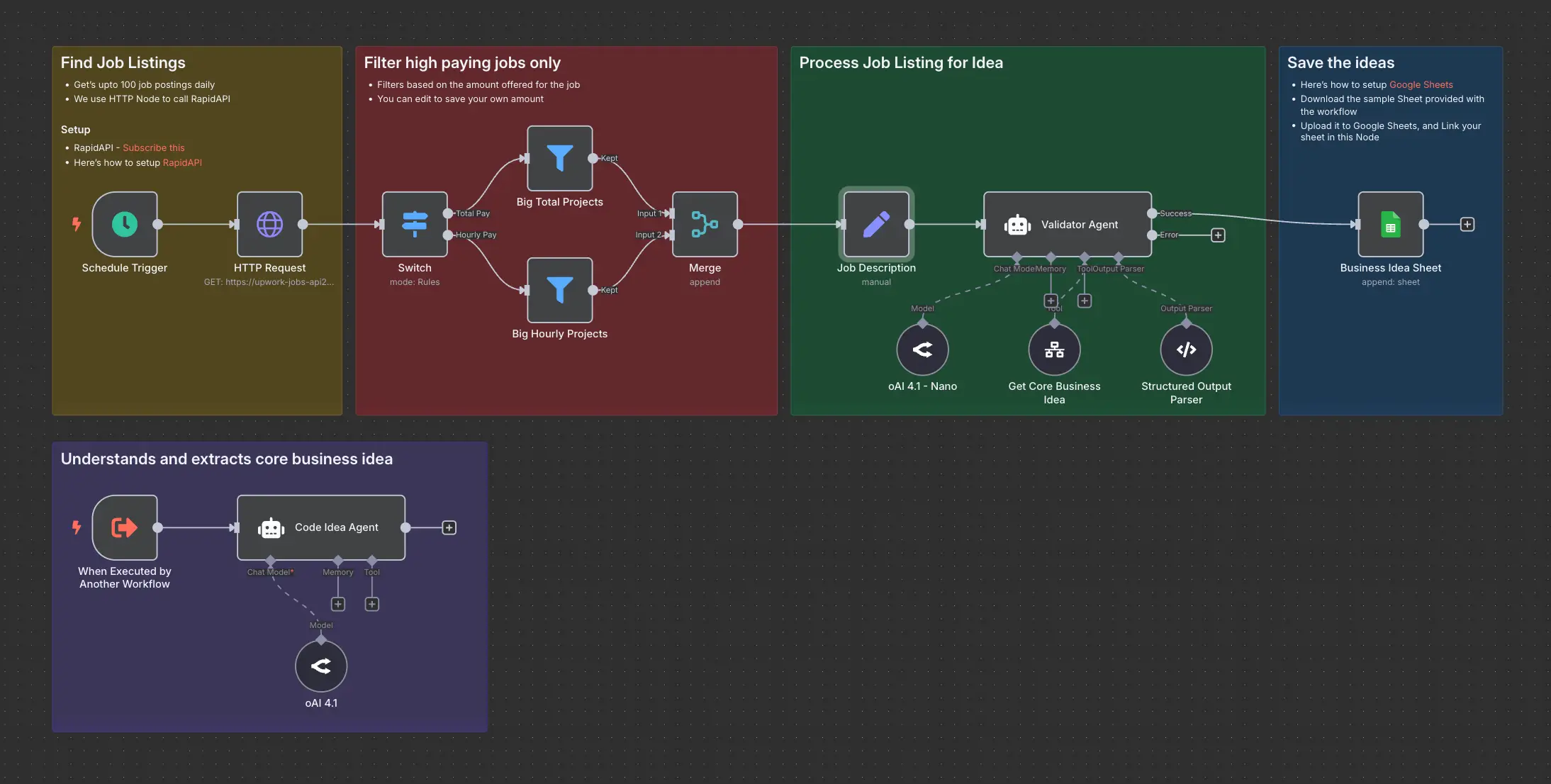
Daily Validated Business Ideas using n8n and Upwork