GPT-Live Hit ChatGPT Business: Should You Add Voice to Support Workflows Yet?

Table of Contents
- Introduction
- What is GPT-Live and how does ChatGPT Business Voice fit your ops stack?
- Why do business owners confuse consumer GPT-Live demos with ops-ready AI voice customer support automation?
- What works now with GPT-Live business voice before the public API ships?
- What should you skip until GPT-Live has an API and proper logging?
- How does GPT-Live full-duplex voice delegation to GPT-5.5 change support workflows?
- How should you pair ChatGPT Business Voice with WhatsApp and webchat today?
- What does credits-based ChatGPT Business Voice pricing mean for your pilot budget?
- What is a 30-day internal pilot checklist for GPT-Live business voice?
- How does GPT-Live compare to WhatsApp Calling API for customer-facing voice?
- When should you book a roadmap call to rank voice vs chat automation?
- Frequently Asked Questions (FAQs)
Introduction
On July 8, 2026, OpenAI shipped GPT-Live - full-duplex voice models that listen and speak at the same time, replace Advanced Voice Mode on consumer ChatGPT, and delegate harder reasoning to GPT-5.5 in the background. Two weeks later, ChatGPT Business release notes added Business Voice inside Chat for Business workspaces, with credits-based pricing and an explicit warning: not for customer-facing production yet.
That combination is exciting and misleading at the same time. A founder watches a slick phone demo, hears "it sounds human," and assumes their support queue can go voice-first next month. It cannot - at least not on GPT-Live directly. There is no public API at launch, only a signup form. Business Voice is a controlled sandbox for employees, not a programmable front door for paying customers.
This guide is for ops leads and founders evaluating GPT-Live business voice against AI voice customer support automation on channels you already own: WhatsApp, webchat, email triage. It separates what to pilot internally now from what to skip until APIs, logging, and escalation paths exist. For programmable voice on a channel customers already use, see WhatsApp Business Calling API: chat-to-voice escalation. For text-first support automation that ships today, see Claude customer support automation: triage before you hire.
What is GPT-Live and how does ChatGPT Business Voice fit your ops stack?
GPT-Live is OpenAI's new voice stack: GPT-Live-1 for paid ChatGPT users and GPT-Live-1 mini for free tiers. Unlike the old pipeline (speech-to-text, then LLM, then text-to-speech), GPT-Live runs full-duplex - it processes incoming audio while generating outgoing speech, handles interruptions, and keeps conversational timing closer to a phone call.
ChatGPT Business Voice is the enterprise-facing slice: voice inside Business Chat, metered with workspace credits, available from July 23, 2026 per OpenAI's release notes. Release notes also cite roughly 5 credits per minute for Voice in Chat and 6 credits per minute for Voice in Work and Codex on desktop. It lets employees talk to ChatGPT in their managed workspace instead of copying problems into a personal Plus account on a phone.
In your ops stack, treat them as two layers:
| Layer | What it is today | Where it belongs |
|---|---|---|
| GPT-Live (consumer) | Default voice in ChatGPT apps | Individual prototyping, not your production system |
| Business Voice | Credits-metered voice in Business Chat | Internal pilots, training, workflow design |
| Your automation stack | n8n, webhooks, CRM, help desk APIs | Customer-facing chat, triage, escalation you control |
GPT-Live proves the interaction model. Business Voice lets teams experiment under admin controls. Neither replaces the orchestration layer you need for real support volume: ticket IDs, consent flags, SLA timers, and audit trails. Consumer GPT-Live also skipped Business, Enterprise, and Edu workspaces at the July 8 launch - another signal that OpenAI staged rollout carefully before workspace-wide exposure.
Why do business owners confuse consumer GPT-Live demos with ops-ready AI voice customer support automation?
A consumer demo optimizes for wow, not ops. You tap Voice in ChatGPT, ask a nuanced question, interrupt mid-sentence, and the model recovers gracefully. That is a product showcase inside OpenAI's app - not your telephony queue, not your WhatsApp inbox, not your Zendesk view.
Three gaps get glossed over in LinkedIn clips:
No programmable ingress. At launch, GPT-Live is not on a public API. You cannot route inbound PSTN calls, WhatsApp voice sessions, or website click-to-talk buttons into GPT-Live-1 with your own auth, recording policy, and data retention rules. OpenAI offers a waitlist, not an integration contract.
No first-class logging for your stack. Consumer ChatGPT threads are not your system of record. Support automation needs message IDs tied to CRM contacts, agent assignments, escalation reasons, and replayable transcripts for QA. A voice session in someone's ChatGPT tab does not write to HubSpot or Freshdesk by default.
Business Voice is explicitly non-production for customers. OpenAI's Business release notes frame Voice as experimental internal use. That is a feature, not a bug - it keeps you from bolting an immature channel onto public support before governance exists. The confusion happens when teams hear "Business" and skip the "not customer-facing production yet" footnote.
AI voice customer support automation still lives in text channels with mature APIs, plus human voice where policy allows. GPT-Live is upstream R&D, not infrastructure you deploy this quarter.
What works now with GPT-Live business voice before the public API ships?
You can get real value without pretending ChatGPT is your contact center. Focus on internal, low-risk workflows where a human employee is always in the loop.
Internal help desk rehearsal. HR policy questions, IT "how do I reset VPN," benefits edge cases - employees speak to Business Voice, get draft answers, and your team notes where it hallucinates or misses nuance. You are building a failure catalog before customers hear anything.
Real-time translation and multilingual standups. GPT-Live's conversational loop plus GPT-5.5 reasoning is strong for fluid cross-language Q&A. A manager asks in Hindi; the model responds in English for the distributed team. Still verify sensitive terms with a human for regulated wording.
Brainstorming support macros and call scripts. Support leads talk through angry-customer scenarios aloud, interrupt themselves, ask for three tone variants. Faster than typing prompts when you are thinking out loud. Export the good lines into your help center and chatbot intents afterward.
Agent co-pilot during live calls (manual). An agent keeps a second device open to Business Voice, whispers "customer wants refund outside window, what does policy say?" and paraphrases the suggestion. This is augmentation, not automation - no customer talks to the AI directly.
Workflow design for the API era. Map intents, escalation triggers, and "never say this" rules now. When GPT-Live APIs arrive, you are not starting from a blank whiteboard.
These patterns cost credits, not reputation. They produce scripts, guardrails, and intent lists that port into omnichannel chat when you wire APIs.
What should you skip until GPT-Live has an API and proper logging?
Do not ship these as production paths while Business Voice remains internal-only and GPT-Live lacks a public integration surface:
Inbound public phone trees. "Press 1 for billing" routed to GPT-Live in ChatGPT is not architecture - it is a demo duct-taped to your brand risk.
Unsupervised customer voice on your website. Click-to-talk that lands in an employee's ChatGPT session has no SLA, no queue fairness, and no compliant recording story.
Replacing text automation you have not fixed yet. If WhatsApp DMs sit unread for hours or webchat has no triage, voice adds latency and cost without fixing the bottleneck. See what to automate first: a revenue-first prioritization framework before you add a new modality.
Auto-send voice replies to regulators, finance, or health topics. High-stakes categories need human approval paths you cannot enforce inside a chat app alone.
Buying telephony gear for GPT-Live specifically. SIP trunks, IVR platforms, and call recording contracts should wait until you know latency, pricing, and data handling for the API - not the consumer app.
The skip list is temporary. It is also protective. Teams that rush voice-first without logging learn expensive lessons in public.
How does GPT-Live full-duplex voice delegation to GPT-5.5 change support workflows?
Architecturally, GPT-Live separates talking from thinking. The voice layer maintains the conversational loop - interruptions, pacing, backchannel cues - while harder tasks delegate to GPT-5.5 (search, multi-step reasoning, structured outputs).
For support workflow design, that split implies a pattern you will reuse even outside OpenAI:
- Fast conversational layer handles greetings, clarifying questions, sentiment, and simple lookups.
- Heavy reasoning layer runs only when needed - policy interpretation, cross-ticket history, complex troubleshooting trees.
- Human layer takes over when confidence drops, accounts are high-value, or compliance demands it.
Today you approximate this in text with Haiku-or-Sonnet-style routing in Claude support triage pipelines. GPT-Live previews the same economics for voice: cheap duplex chatter, expensive reasoning on demand.
Full-duplex also changes training data you need. Turn-based bots tolerated long pauses; duplex voice punishes them. Your future voice agents need shorter utterances, explicit confirmation steps, graceful handoff phrases when delegating to a human, and interrupt handling that does not lose thread context. Pilot those behaviors in Business Voice with employees before customers experience awkward overlaps.
When APIs ship, n8n (or similar) will sit between telephony or messaging webhooks and model endpoints - same pattern as text automation today. If you are new to orchestration, start with a free n8n Cloud account and text workflows first; voice nodes come later.
How should you pair ChatGPT Business Voice with WhatsApp and webchat today?
Voice and text are one journey, not competing products. Customers start where friction is lowest - usually a DM or site widget - and escalate to voice when stakes rise.
Phase 1 (now): Automate text on channels with APIs. One agent core across WhatsApp, Instagram, Messenger, and webchat per unify WhatsApp Instagram Messenger into one custom agent. Classify, draft, human approve, log to CRM.
Phase 2 (now, selective): Human or hybrid voice on WhatsApp via the WhatsApp Business Calling API - chat qualifies, consent captured in-thread, call triggered with summary attached. That is programmable today, unlike GPT-Live. That post covers D2C escalation mechanics; this post covers why GPT-Live is not a substitute for that stack in July 2026.
Phase 3 (when GPT-Live API exists): Optional AI voice leg on the same context object - thread ID, cart value, escalation reason - so duplex voice continues a webchat without asking the customer to repeat their order number.
Design the handoff document now even if you cannot wire GPT-Live yet:
| Field | Why it matters |
|---|---|
channel_origin |
webchat, WhatsApp, phone |
intent |
billing, technical, sales |
sentiment_score |
frustration routing |
consent_voice |
timestamp plus exact copy shown |
summary_for_agent |
3-5 bullet recap |
Business Voice pilots should produce these fields manually so your n8n flows are ready on day one of the API.
What does credits-based ChatGPT Business Voice pricing mean for your pilot budget?
OpenAI meters Business Voice through workspace credits rather than unlimited seats. Exact per-minute rates will shift; verify in your admin console. The strategic implication is stable: voice is a compute-heavy line item, not a flat SaaS seat.
Budget pilots with caps:
- Assign Voice to a pilot group (5-15 people), not the whole company on day one.
- Track sessions per week and average duration in a simple spreadsheet until admin dashboards mature.
- Compare credit burn against outcomes: macros written, scripts validated, translation hours saved - not "calls deflected," because you are not deflecting public calls yet.
If credits spike because someone left Voice running in a drawer, that is a governance signal before you scale. Pair credit limits with the internal-only policy OpenAI already signals in release notes.
For customer-facing automation ROI math, stay on text channels where per-message API costs are predictable and tie to revenue events (lead qualified, ticket resolved). Voice ROI comes later, after ingress and logging exist.
What is a 30-day internal pilot checklist for GPT-Live business voice?
Use this if you want structured learning without touching customer-facing production.
Week 1: Scope and guardrails
- Name a pilot owner (support ops or RevOps, not "everyone").
- List 10 internal question types you will test (IT, HR, product how-tos).
- Write a one-page do not use for list (customer calls, legal advice, medical).
- Enable Business Voice only for the pilot group; confirm credit pool with finance.
Week 2: Run scenarios
- Three employees each run five spoken sessions; log hallucinations and great answers.
- Record (with consent) two role-play angry-customer scripts; note where duplex interruptions help or hurt.
- Draft five support macros directly from voice sessions.
Week 3-4: Map, decide, backlog
- Trace each good pilot answer to a help center article or CRM field.
- Define five escalation triggers for a future production voice bot.
- Rank next build with what to automate first.
- Document API requirements: logging fields, latency budget, languages, recording policy.
Daily: 10-minute standup on what broke and what copy to steal. Weekly: credit usage vs artifacts (macros, scripts, guardrails).
How does GPT-Live compare to WhatsApp Calling API for customer-facing voice?
They solve different problems in July 2026.
| Dimension | GPT-Live / Business Voice | WhatsApp Business Calling API |
|---|---|---|
| Customer-facing production | Not yet (Business Voice internal-only) | Buildable on Cloud API with consent |
| API for your app | Waitlist only | Webhooks plus HTTP calls today |
| Channel | OpenAI Chat apps / Business Chat | WhatsApp threads customers already use |
| Duplex AI agent | Strong in-app demo | You bring STT, LLM, TTS, or human agents |
| Logging | Chat threads, not your CRM | Your backend owns events and CRM writes |
| Best near-term use | Internal pilot, co-pilot | Escalate qualified chat to voice call |
GPT-Live is the interaction research lab. WhatsApp Calling is the programmable revenue and support channel for many D2C and regional businesses right now.
Do not wait on GPT-Live to fix a WhatsApp text backlog. Do run Business Voice pilots so when OpenAI opens the API, your duplex UX standards are already written.
When should you book a roadmap call to rank voice vs chat automation?
Book a working session when voice is a strategic question, not a shiny distraction:
- WhatsApp or webchat already drives revenue, and leadership asks "should we add AI voice?"
- You have a pilot backlog competing with lead response, support triage, and CRM glue.
- Compliance or brand risk needs a ranked plan before anyone demos GPT-Live to customers.
A 45-minute roadmap call maps your channel order: text automation first, WhatsApp call escalation second, GPT-Live API third - with consent copy, logging fields, and n8n shape on one page. Reserve your roadmap call if you want priority order before you spend credits or engineering weeks on the wrong modality.
Frequently asked questions
Quick answers on the topics covered in this article.
GPT-Live is OpenAI's full-duplex voice model family (GPT-Live-1 and GPT-Live-1 mini) that listens and speaks simultaneously. OpenAI introduced it on July 8, 2026, replacing Advanced Voice Mode in consumer ChatGPT apps.
GPT-Live rolled out first on consumer paid and free ChatGPT plans. ChatGPT Business Voice - voice inside Business Chat with credits pricing - arrived in release notes on July 23, 2026, as a separate Business workspace feature.
Not as production infrastructure. There is no public GPT-Live API at launch (only a signup form), and OpenAI labels Business Voice as not for customer-facing production yet. Use it for internal pilots and design work.
GPT-Live is the underlying full-duplex voice technology. Business Voice is how Business workspace users access voice in Chat with credits-based metering and admin controls, aimed at internal experimentation.
No. GPT-Live does not route your public messaging queues today. Keep automating WhatsApp and webchat with APIs you control; treat GPT-Live as a lab for future voice legs on the same customer context.
The voice layer maintains real-time dialogue while sending harder reasoning, search, or multi-step tasks to GPT-5.5 in the background, then folds answers back into speech without breaking conversational flow.
Internal IT or HR Q&A rehearsal, translation for multilingual teams, brainstorming support scripts aloud, and agent co-pilot notes during live calls (with the employee still speaking to the customer).
Text-first triage and draft pipelines, omnichannel chat on WhatsApp and webchat, CRM logging, and - if voice matters for revenue - WhatsApp Calling API escalation with consent and summaries.
Credits tie cost to actual voice usage (sessions and duration), which reflects the higher compute cost of streaming audio. That encourages capped pilots instead of unlimited company-wide voice overnight.
When you need programmable call escalation inside threads customers already use, with webhooks, consent in chat, and CRM ownership today. GPT-Live is not a substitute for that channel API in July 2026.
Share this article
Related workflows
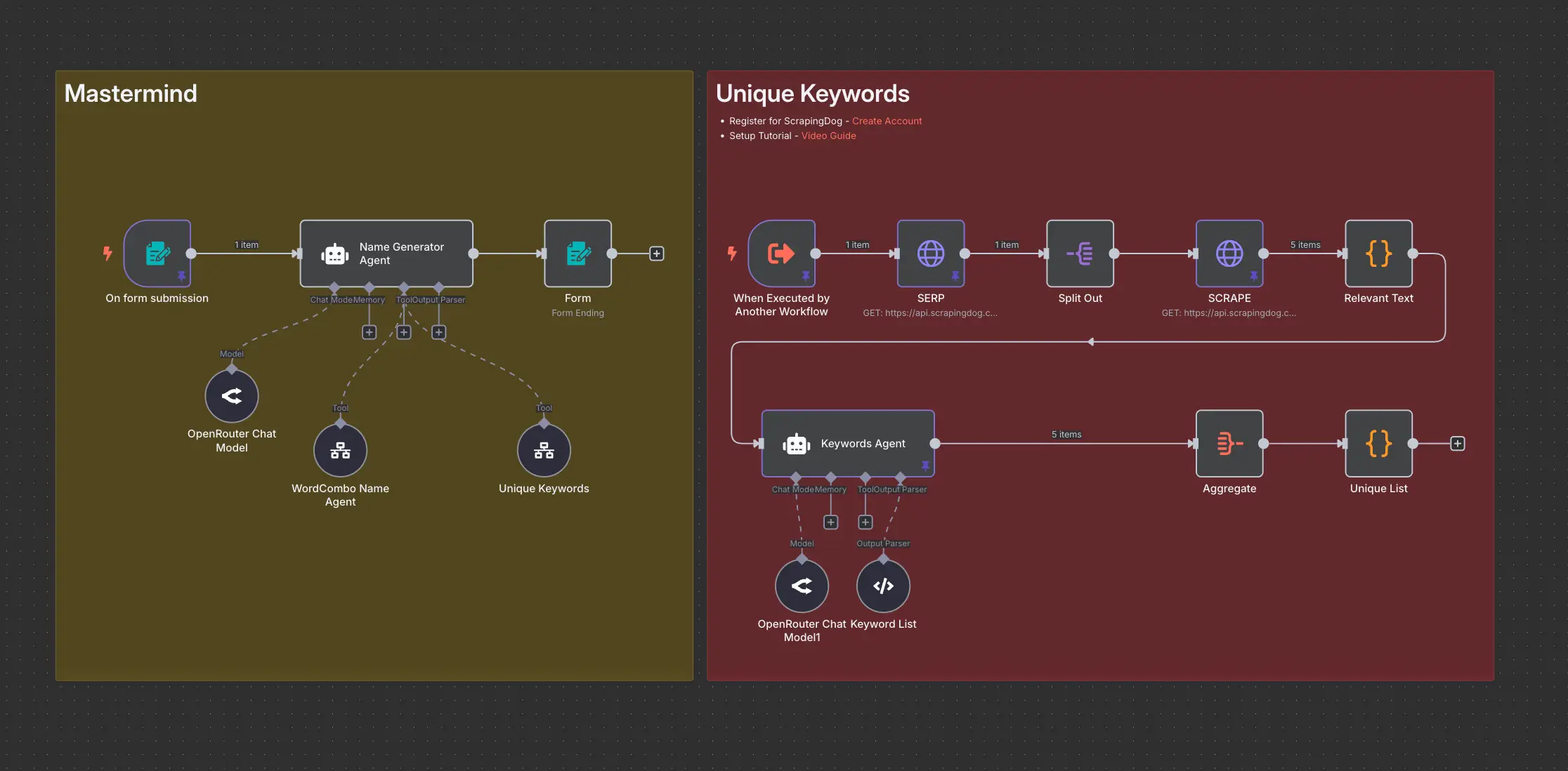
Domain Name Generator n8n workflow using ScrapingDog
LinkedIn Automation From X Posts