Organic Instagram DM Automation: Scale D2C Product Questions
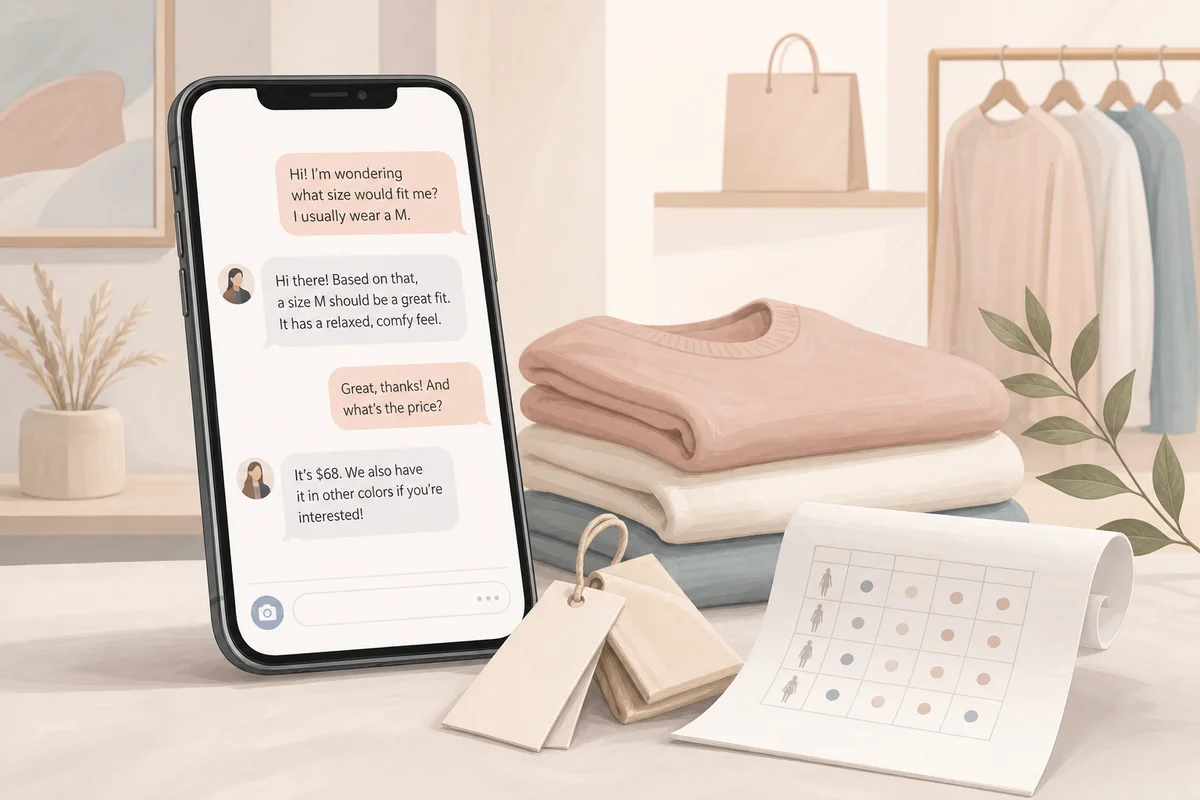

Table of Contents
- Introduction
- What is Instagram DM automation for business in 2026?
- Why do organic Instagram DMs break D2C teams when volume spikes?
- How does a Claude agent on the Instagram Messaging API work?
- What should RAG include to automate Instagram product questions accurately?
- How do comment-to-DM flows fit D2C social selling without feeling spammy?
- When should humans take over refunds, angry threads, and edge cases?
- How does an API-first Claude stack compare to ManyChat for Instagram DMs?
- What metrics prove Instagram DM automation is driving revenue?
- What is the right build order across Instagram and Messenger?
- When should you book a roadmap call for API vs ManyChat?
- Frequently Asked Questions (FAQs)
Introduction
If you run a product-led brand on Instagram, your DMs are probably your quietest sales channel and your loudest ops headache at the same time.
A reel pops off, a creator tags you in a try-on, you drop a collection in stories, and the inbox fills with messages that actually move revenue: "Do you have this in M?", "Price?", "Ship to Canada?", "What size is the model wearing?" Most D2C teams still answer the same way they did years ago: tab to Shopify, open a PDF size chart, copy-paste a shipping block from Notion. It works until volume crosses a line where nights and weekends become a leak in conversion.
Instagram DM automation for business in 2026 is not keyword blasts or generic chatbots. It is a Claude agent on Meta's Instagram Messaging API, grounded with retrieval-augmented generation (RAG) on your SKU catalog, size charts, stock rules, and policy snippets, with clear human takeover on refunds, complaints, and judgment calls. That stack lets you automate Instagram product questions while keeping D2C social selling personal where it matters.
This guide is for brands where organic DMs (story replies, comment threads, unprompted product asks) are already a revenue line, not for paid click-to-message campaigns (that is a different funnel) and not for scheduling quote reels (that is content automation, not inbox ops). Before you add another tool, map friction with AI automation audit and readiness. When DMs compete with lead capture and support on the same calendar, use what to automate first so you build the layer that protects margin first.
What is Instagram DM automation for business in 2026?
Instagram DM automation for business means routing incoming messages, story replies, and eligible comment triggers through software that can read intent, pull facts from your systems, draft on-brand replies, and escalate to a human when risk or nuance is high.
The 2019 version was brittle: if the user says "price", send paragraph three. The 2026 version is opt-in, context-aware, and grounded in your catalog. Meta delivers events to your backend via the Instagram Messaging API (same infrastructure ManyChat and help desks use). Your middleware calls Claude with conversation history plus retrieved documents, then sends the reply back through the API.
Good automation respects platform norms: user-initiated threads, no unsolicited spam, clear handoff when someone is upset or asking for money back. Bad automation treats every DM like a broadcast list. Buyers on Instagram expect a conversation, not a macro wall.
For D2C brands, the goal is narrow and measurable: shrink time-to-answer on repetitive product and policy questions so your team spends capacity on content, creators, and threads that need a human.
Why do organic Instagram DMs break D2C teams when volume spikes?
Organic traffic is flattering until it becomes operational debt. Posts that move product often do not have the highest likes; they have high sends, story replies, and tap-throughs into DMs. Each message is mid-to-high intent: the buyer chose the fastest path to the information they need to purchase.
The manual playbook breaks in predictable ways:
Response time slips when buyers are most active. Evenings and weekends are when your audience scrolls; they are when your team is thinnest. Slow replies on sizing or stock let a competitor win the same session.
Repetitive work consumes your best people. Social managers become human APIs: lookup SKU, map waist and height to a chart, paste shipping windows. That is not "community building"; it is data entry with emoji.
Conversion drops at the decision moment. Someone ready to buy the brown jacket in their size will not wait six hours while you hunt inventory. The better your organic content performs, the faster this compounds.
None of this means you should ignore DMs. It means the workflow that worked at twenty messages a day will not survive two hundred without a different spine: classify intent, retrieve truth, draft, approve or auto-send only where safe, log outcomes.
How does a Claude agent on the Instagram Messaging API work?
Picture a new story reply: "I'm 5'4", 28 waist - S or M on the cargo pants?"
Ingest. Meta sends a webhook to your app with sender id, thread id, message text, and channel metadata (DM vs story reply vs comment trigger).
Classify. Claude returns structured fields: intent (sizing, stock, shipping, order issue, complaint), sentiment, confidence, and whether auto-reply is allowed. Use a fast model for classification; reserve a stronger model for nuanced drafts when revenue or risk warrants it.
Retrieve. RAG queries your index: product record for the cargo pants, size chart rows, fit notes ("runs small"), live stock by variant, shipping snippet for the buyer's country.
Draft. Claude composes a short, on-brand answer citing only retrieved facts: recommendation with caveats, in-stock colors, link to cart if you allow it.
Act or escalate. Low-risk, high-confidence threads can auto-send within policy. Refunds, anger, or low confidence route to a human queue with full context prefilled.
Log. Store classification, sources used, draft, final message, and human overrides. That log is how you improve prompts and your knowledge base weekly.
Middleware can be n8n, Make, or a small Node service; the pattern is the same as help desk automation described in Claude customer support automation: triage before you hire, adapted for social threads instead of tickets.
What should RAG include to automate Instagram product questions accurately?
RAG is what keeps the agent from inventing inventory. At minimum, index:
SKU catalog - titles, descriptions, variants, price, media URLs, tags, and collection membership so "the dress from yesterday's reel" can resolve to a product id when your middleware attaches context from the story or post.
Size charts and fit notes - not only the PDF table but merchandiser language: "model is 5'7 in S", "oversized fit", "size up for broad shoulders".
Stock rules - in stock, low stock, preorder, backorder, restock dates only when your commerce platform exposes them. Never let the model promise dates that are not in the feed.
Policy snippets - shipping regions, duties language, return windows, exchange rules, warranty one-liners. Short, citeable blocks beat dumping entire legal pages.
Brand voice - tone, words to avoid, discount policy ("never offer codes in DM unless flagged in CRM").
Refresh the index when merchandising updates charts or when humans answer a question the bot missed; those answers become tomorrow's retrieval targets. If leads from ads also land in CRM, Meta lead ads to CRM automation is the upstream companion so DM context and paid lead data do not live in separate silos.
How do comment-to-DM flows fit D2C social selling without feeling spammy?
D2C social selling on Instagram is increasingly conversational: content sparks a question, the question moves to DM, DM moves to cart. Comment-to-DM bridges public intent ("Price?" on a reel) into a private thread where you can send links, sizing help, or a cart nudge.
Design flows around clear user action:
- Comment keywords on campaign posts ("SIZE" for fit help on a drop).
- Story stickers that invite DMs ("Ask fit questions here").
- Replies to story frames that reference a specific SKU your backend can attach to the session.
The agent handles the first turn: acknowledge, answer from RAG, ask one clarifying question if needed. Humans join when the buyer mentions a failed delivery, a damaged item, or emotion that classification flags as negative.
Avoid cold outbound DMs to people who never messaged you. Platform policy and buyer trust both punish that. The win is speed and accuracy on threads people already started.
When should humans take over refunds, angry threads, and edge cases?
Automation should make humans more available for hard work, not hide them.
Route to humans immediately for refund and chargeback language, threats, harassment, medical or safety claims about products, requests that contradict written policy, high-AOV accounts you flag in CRM, and any message where classifier confidence is below your threshold.
Let the agent draft but not send when sentiment is frustrated but not yet escalated: a human approves tone before it goes out.
Auto-send only after measurement on narrow categories you have audited: basic in-stock checks, standard shipping windows, restock status when the feed is authoritative.
Make handoff visible: "I'm your sizing assistant - a teammate will join if we need to make an exception." Clarity beats pretending every thread is the founder typing on their phone.
How does an API-first Claude stack compare to ManyChat for Instagram DMs?
ManyChat (and similar builders) excel when you need fast comment-to-DM flows, simple keyword branches, and marketing-owned iteration without engineering.
ManyChat (and similar builders) excel when you need fast comment-to-DM flows, simple keyword branches, and marketing-owned iteration without engineering. Time-to-first-flow is days. Tradeoffs: less flexible RAG, limited live inventory logic, and another subscription that may not share a brain with Messenger or your CRM.
API-first Claude costs more to stand up but gives you:
- Full catalog and policy retrieval across every variant.
- Live checks against Shopify (or your platform) for stock and order status.
- One agent core reused on Instagram, Messenger, and later WhatsApp with channel adapters.
- Custom guardrails, logging, and PII handling aligned to your compliance comfort.
Hybrid is common: ManyChat owns structured lead magnets and keyword entry; complex free-form DMs webhook into your Claude backend.
| Factor | ManyChat-first | API + Claude |
|---|---|---|
| Time to first live flow | Days | Weeks |
| Nuanced sizing / policy answers | Limited | Strong with RAG |
| Live inventory truth | Often manual updates | Direct commerce API |
| Multi-channel one brain | Separate bots | Shared agent core |
| Best when | Smaller catalog, simple campaigns | DMs already drive material revenue |
What metrics prove Instagram DM automation is driving revenue?
Counting DMs answered is the wrong scoreboard. Track:
Median first-response time - split AI-handled vs human-handled; aim for seconds on routine product questions.
DM-to-purchase conversion - attribute orders where the buyer messaged within a defined window before checkout (UTM in links, discount codes, or platform insights).
Fully resolved by AI rate - threads closed without human touch; audit samples weekly for accuracy.
Escalation rate and human resolution time - escalations should be fewer but higher quality.
Edit distance - how much humans change AI drafts; shrinking edits mean better retrieval and prompts.
Top unanswered intents - questions that still force human lookup signal gaps in your index (missing fit note, stale policy).
Review monthly with merchandising and social: if "runs small" generates fifty DMs, fix the product page and the RAG note, not just the bot.
What is the right build order across Instagram and Messenger?
Phase 1 - Audit. Sample two weeks of DMs; tag intents; copy your team's best answers for the top twenty questions.
Phase 2 - Sandbox. Connect Messaging API to staging; ingest catalog and policies; test Claude replies against historical threads without customers seeing them.
Phase 3 - Narrow live. Auto-reply only on low-risk intents (in-stock yes/no, standard shipping regions). Everything else stays human with AI drafts optional.
Phase 4 - Comment-to-DM and sizing. Turn on campaign keywords and story flows; expand sizing recommendations with confidence thresholds and escalation.
Phase 5 - Messenger and shared memory. Reuse the same RAG and agent on Messenger so a buyer who switches apps does not restart from zero. Sequence Instagram first if that is where revenue already concentrates.
Do not parallel-build three channels before one works; broken automation on two surfaces is worse than slow humans on one.
When should you book a roadmap call for API vs ManyChat?
Book a 45-minute roadmap call when:
- DMs are already a meaningful sales line but response time is slipping as content scales.
- You are tool-shopping between ManyChat, native Meta tools, and a custom stack without a ranked build order.
- Instagram and Messenger need one agent strategy, not three disconnected bots.
- Engineering time is limited and you need a phased plan: what to buy vs what to build first.
A 45-minute AI roadmap call maps API vs ManyChat (and hybrid), human takeover rules, and channel order across Instagram and Messenger so organic DMs stay a revenue channel instead of the inbox that breaks your team. Reserve my roadmap call when copy-paste sizing answers are eating your social team and you want a sequenced plan, not another pilot stuck in Slack.
Frequently asked questions
Quick answers on the topics covered in this article.
It is software that reads Instagram DMs and eligible comment or story triggers, classifies intent, pulls answers from your catalog and policies, and replies or escalates to a human. Modern stacks use the Instagram Messaging API plus an AI model such as Claude with RAG, not simple keyword autoresponders.
Ground the model with RAG on SKU data, size charts, fit notes, and live inventory feeds from your commerce platform. Auto-send only on high-confidence, low-risk intents; require human approval or takeover for refunds, complaints, and edge cases. Log and audit replies weekly.
Yes. Organic automation handles story replies, unprompted DMs, and comment-to-DM from content and community. Click-to-message ads send paid, high-intent traffic into the same inbox but need speed and qualification tuned to campaign entry points. Use separate playbooks and metrics.
It is using content and conversation to move buyers from discovery to purchase inside Instagram: reels and stories spark questions, DMs carry fit and stock answers, links or shop tags close the sale. Automation should shorten that loop, not replace the brand voice that started it.
Yes, when RAG includes size charts, fit notes, and product context and you set guardrails (recommendations with caveats, escalate low confidence). Humans should own exceptions, damaged goods, and emotionally charged threads.
When someone comments a keyword or asks a product question on a post, Meta can open a private DM thread. Automation sends the first helpful reply (size help, link, stock status) after the user opts in via comment or sticker, which keeps flows policy-aligned and less spammy.
ManyChat is faster for simple flows and marketing-led tests. API-first Claude fits complex catalogs, live stock, and a shared agent across Messenger. Many brands hybridize: ManyChat for entry triggers, custom backend for free-form product Q&A.
Refunds, chargebacks, angry or abusive messages, policy exceptions, high-value accounts, safety claims, and any low-confidence classification. Also when the buyer explicitly asks for a person.
That is often the main ROI: the agent answers routine product and policy questions when the team is offline. Set expectations in the reply and define SLAs for human follow-up on escalations.
Track first-response time, DM-to-purchase conversion, percent resolved without humans, escalation volume, draft edit rate, and recurring intent gaps. Compare against a baseline from your manual audit before launch.
Share this article
Related workflows
Track & Audit Influencers on Instagram with n8n Automation Workflow with AI
LinkedIn Automation From X Posts