Should You DIY n8n Workflows or Hire a Workflow Automation (2026)


Table of Contents
- Introduction
- Why is the choice between DIY workflow automation and a workflow automation consultant so confusing?
- What does production-ready n8n automation really require beyond the canvas?
- How should you use a build vs buy business automation matrix across time, risk, revenue, and technical depth?
- How much internal time do you need before DIY workflow automation becomes neglect?
- When does operational risk push you toward a workflow automation consultant?
- How much revenue or pipeline should influence your build vs buy decision?
- When does technical depth mean you should not learn n8n only from templates?
- How do self-hosting, credential hygiene, and webhooks change the DIY vs consultant math for n8n?
- When is DIY workflow automation the smart move versus when should you hire an AI integration consultant?
- What total cost of ownership do teams miss when comparing DIY to consultants?
- How do you de-risk a large automation spend without guessing?
- Frequently Asked Questions (FAQs)
Introduction
If you run a small business or own RevOps, you have probably felt stuck between two extremes: infinite YouTube walkthroughs that make n8n look easy, and proposals that sound like build vs buy business automation is always a five-figure agency project.
The real question is narrower and harder: for each workflow, should you invest internal hours in DIY workflow automation, or bring in a workflow automation consultant who treats reliability, credentials, and failure modes as part of the job?
This article is not a relabel of AI consultant vs agency vs freelancer (that is about vendor shape) and not a rate explainer like AI integration consultant cost and pricing. Here the lens is execution risk: time you can spend, what breaks if nobody notices, how much pipeline or cash sits on the wire, and how deep the integration stack really is.
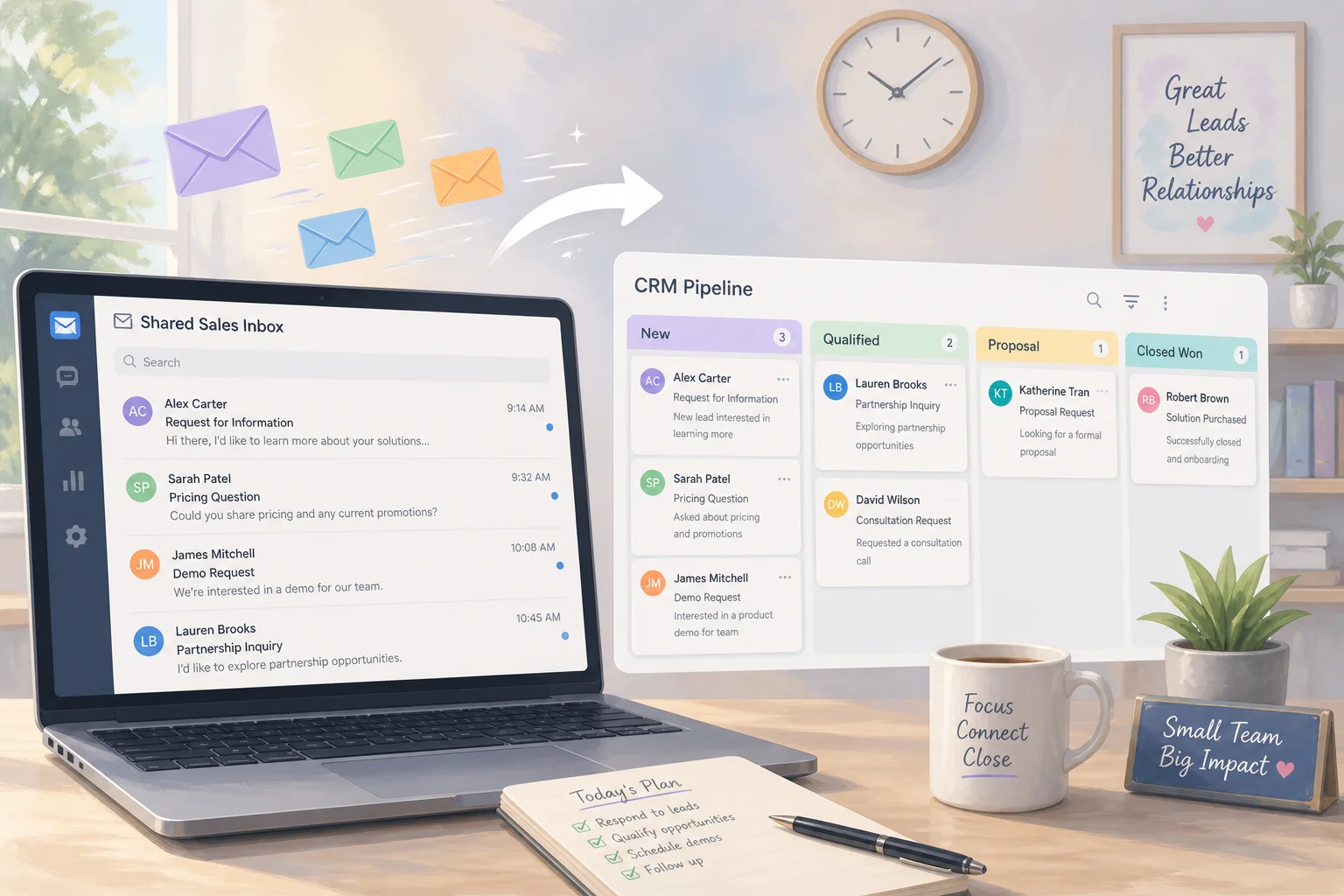
Picture a realistic week: Meta leads land in a shared inbox, someone forwards them into a spreadsheet, a VA updates the CRM on Tuesdays, and marketing asks why attribution never matches finance. A tutorial can show you how to push the same rows into HubSpot in ten minutes. It will not tell you how to dedupe across three properties, reconcile UTM loss when a webhook retries, or who is on call when the CRM API throttles during a launch. That gap is where workflow automation consultant work begins - not because consultants are magical, but because they have already paid tuition on the boring failures.
You do not need a verdict in the abstract. You need a repeatable way to sort candidate workflows into DIY-first, hybrid, and consultant-first buckets before you sign anything. The matrix below is that sort, and it pairs naturally with a short paid roadmap session when your list is long or politically charged.
Why is the choice between DIY workflow automation and a workflow automation consultant so confusing?
Tutorials optimize for the dopamine of a green execution check. They rarely budget for retries, duplicate leads, partial CRM updates, or a webhook that succeeds while the downstream node silently fails. Agencies, meanwhile, sometimes price for speed and transfer of risk without making that trade explicit.
The uncomfortable truth is that DIY workflow automation vs consultant is not a moral choice. It is an allocation problem. If nobody owns maintenance, you did not save money - you deferred an incident. If you hire before you understand the process, you bought a fast implementation of the wrong thing.
Marketing language also blurs categories. "Automation partner" might mean a solo integrator with strong n8n depth, or a reseller wrapping offshore hours. "AI transformation" might mean governance and training, or it might mean three Zapier zaps and a slide deck. Without a crisp scope, you compare a YouTube playlist to a $15k retainer and both feel wrong.
A useful reframing: for each candidate workflow, ask what combination of time, risk, revenue, and technical depth makes learning in public rational, and when it is irresponsible to skip professional design. The next sections make those dimensions concrete for n8n and adjacent glue work.
What does production-ready n8n automation really require beyond the canvas?
On the surface, n8n is triggers, branches, and nodes. Under the hood, anything customer-facing or money-adjacent behaves like lightweight software engineering.
You inherit decisions about self-host vs cloud, where data is allowed to live, how credentials are scoped and rotated, and whether executions are observable enough that failures surface within hours, not quarters. Webhooks add another layer: upstream systems retry or drop events depending on timeouts; your instance needs stable hosting and patterns that acknowledge quickly and finish work safely.
Think in contracts, not demos. A demo answers "can we move a row once?" Production answers "what happens on duplicate webhook delivery, partial writes, schema drift, and a vendor outage during Black Friday?" Those questions are why experienced teams talk about idempotency keys, execution retention policies, and explicit human escalation when confidence scores or validation checks fail.
Maintenance is not optional. Vendors change APIs, required fields appear overnight, and n8n itself ships improvements that deserve a staging pass before production. If that sounds closer to platform ops than "drag and drop," that is the point - templates rarely encode idempotency, dead-letter handling, or a runbook when the person who built the flow is on vacation.
Governance shows up late if you let it: who may publish to production, how you peer-review a workflow diff, and how customer PII is minimized as it transits nodes. None of that is glamorous, which is exactly why it separates hobby builds from build vs buy business automation decisions that hold up under audit or a board question.
If you are evaluating self-hosted n8n for cost or data residency, the setup story matters. For a grounded walkthrough of one durable hosting pattern, see setting up n8n self-hosted on Oracle Cloud - then remember that hosting is only the shell; workflow design still owns the risk.
How should you use a build vs buy business automation matrix across time, risk, revenue, and technical depth?
Treat each workflow as a row you score honestly. The goal is not a perfect spreadsheet - it is to stop defaulting to "we will figure it out" for flows that touch cash and trust.
Use a simple 1-5 score per dimension (1 low, 5 high), then read the row like a product manager. High scores on risk, revenue, or depth pull you toward external help even when the org is technical, because calendar time is finite.
| Dimension | Score 1-2 (lean DIY) | Score 4-5 (lean consultant) |
|---|---|---|
| Time available | Named owner with weekly maintenance window | No owner or only reactive firefighting |
| Risk if it fails | Annoyance, easy manual fallback | Revenue, legal, or customer trust impact |
| Revenue or pipeline | Peripheral reporting or internal ops | Paid acquisition, sales SLA, billing, renewals |
| Technical depth | Single vendor node, simple mapping | Multi-system identity, idempotency, residency |
How much internal time do you need before DIY workflow automation becomes neglect?
DIY is rational when a named owner has recurring hours for build, test, and log review - not a heroic weekend. If the only person who can maintain the stack is already at capacity on revenue work, build vs buy business automation quietly becomes build and abandon.
Calendar math matters. A realistic maintenance budget is often 10-20% of the original build time per month for active stacks: watching failed executions, adjusting for API changes, and tightening alerts as you learn edge cases. If you cannot fund that internally, you are not choosing DIY - you are choosing fragile DIY.
Consulting input makes sense when you need production readiness in weeks, when knowledge is concentrated in one employee, or when you want an architecture pass even if your team keeps day-to-day edits. A short engagement can also standardize patterns so future DIY work is safer.
When does operational risk push you toward a workflow automation consultant?
Low-risk automations include internal nudges, non-binding summaries, and tasks where manual fallback is painless. High-risk automations include lead routing from paid channels, anything touching regulated data, invoice or subscription state changes, and flows where silent failure maps to churn, fines, or contract breach.
Risk is not only "does the API return 200?" It is also data quality: partial updates that leave CRM states inconsistent, race conditions when two webhooks represent the same human, and auditability when a regulator or enterprise customer asks what happened to a record six months ago.
You do not always need a full implementation partner - sometimes you need a workflow automation consultant for a design review, threat modeling on credentials, and an alert plan your team can operate. That review is often the cheapest insurance policy on the board.
How much revenue or pipeline should influence your build vs buy decision?
Rough bands help when politics get loud. If a flow influences a small experimental channel, learning in public is fine. If it sits on the path from paid lead to booked revenue, treat it like infrastructure. If it touches renewal, dunning, or cash application, brittle DIY is expensive even when the monthly SaaS bill looks small.
Translate "revenue" into operational language: speed-to-lead, meeting booking rate, invoice latency, churn signals, and expansion triggers. When a workflow changes any of those dials, you want explicit metrics before and after go-live, not vibes.
The point is not a universal dollar threshold - it is that revenue at stake raises the bar for observability, rollback, and ownership. If you cannot measure the workflow's effect on pipeline or cash within a week of launch, pause and define metrics before you scale traffic through it.
When does technical depth mean you should not learn n8n only from templates?
Depth shows up as multi-hop identity between systems, deduplication keys, OAuth rotation, compensating logic when step three fails after step two succeeded, and data residency constraints. If several of those show up at once, templates stop being shortcuts and start being liability.
Another signal is integration surface area: not how many nodes you drew, but how many independent failure domains you chained. Five shallow hops can be safer than two deep hops if the deep hops include custom SQL, file parsing, and LLM extraction in one execution.
That is often when to involve someone who has shipped similar paths before - or to sequence DIY prototype, consultant hardening instead of pretending a single hero node map is production. The prototype's job is learning; hardening's job is not apologizing to customers later.
How do self-hosting, credential hygiene, and webhooks change the DIY vs consultant math for n8n?
Self-hosting buys control and can help residency; it costs engineering time for TLS, backups, upgrades, and sometimes queue mode when volume spikes.
Self-hosting buys control and can help residency; it costs engineering time for TLS, backups, upgrades, and sometimes queue mode when volume spikes. If you have no one comfortable owning that base layer, a fractional integrator who builds a boring, well-monitored foundation is often cheaper than learning DevOps during an outage.
If you are already committed to self-host for policy reasons, treat the baseline as a small internal platform: patch cadence, restore drills, disk growth on execution logs, and access control for the n8n UI itself. A consultant can help you draw a line between "platform owned by IT" and "workflows owned by ops" so changes do not require hero unlocks.
Credential hygiene is where amateur stacks leak: shared admin tokens, personal OAuth powering company-wide automation, test keys pointed at production records. A consultant should leave you with naming conventions, scoped secrets, and separation between environments - not drama when a vendor forces rotation.
Rotation is a process, not a checkbox. When someone leaves, when a contractor rolls off, or when a breach advisory lands, you need to know which workflows used which credential family - otherwise you freeze half the business to rotate one key.
Webhooks punish naive hosting. Cold starts, aggressive timeouts, and long synchronous chains all increase dropped events. Production patterns usually shorten the webhook path, enqueue work, and retry with backoff - ideas that rarely appear in a ten-minute tutorial but matter the moment a Meta or Stripe stream backs up.
Also read upstream docs for idempotency semantics: some sources send the same logical event multiple times on purpose. Your handler should be safe under replay, not "usually fine because we have not seen duplicates yet."
When is DIY workflow automation the smart move versus when should you hire an AI integration consultant?
DIY workflow automation is a strong move for internal productivity, experiments on non-critical paths, and early-stage processes that still change weekly.
DIY workflow automation is a strong move for internal productivity, experiments on non-critical paths, and early-stage processes that still change weekly. It is also smart when you are deliberately building in-house capability and start with low-risk, high-annoyance work so your team learns n8n without betting the quarter on a single canvas.
A practical sequencing rule: if the business process is still a moving target, DIY helps you learn what to stabilize. Once the process stabilizes and the failure cost jumps, shift from experimentation to engineering discipline - either internal, external, or hybrid.
Bring in an AI integration consultant when models classify, summarize, or draft in ways that drive automated customer-facing actions. LLMs drift, hallucinate, and create new privacy surfaces. If AI output becomes a decision rather than a suggestion, you need evaluation harnesses, human-in-the-loop gates, and monitoring - not just an API key in a node.
That is also when to hire an AI integration consultant even if your team is strong at n8n: orchestration skill does not automatically imply model evaluation, red-team prompts, or data minimization patterns for regulated text.
If you are still choosing provider types after you know the scope, use AI consultant vs agency vs freelancer as the companion read - this post stays on build vs buy, not job title.
What total cost of ownership do teams miss when comparing DIY to consultants?
Most bake-offs compare internal hours to a proposal total. That ignores learning curve, incident time, opportunity cost of distracted leadership, rework after a bad launch, and the quiet tax of missed leads.
Add these line items mentally before you declare DIY "free":
- Learning tax: reading vendor docs, testing edge cases, and building the first observability loop
- Maintenance tax: monthly reviews of failed runs and dependency updates
- Coordination tax: meetings when sales, finance, and ops disagree on field meanings
- Incident tax: emergency debugging during launches, plus customer apology cycles
- Knowledge risk: bus factor when one builder owns the critical path
Bad automation is expensive even when the line item is zero. When you add risk cost and knowledge concentration, a scoped consulting fee often looks like insurance with documentation attached.
For how proposals are usually structured once you decide to buy help, see AI integration consultant cost and pricing - still read it after you know which workflows belong in the "never DIY blind" bucket.
How do you de-risk a large automation spend without guessing?
You do not have to jump from tutorials to a retainer. A focused roadmap session should leave you with a ranked backlog, rough complexity tags, and clarity on what your team can own versus what should be outsourced first. That is the same spirit as what you leave with from a 45-minute AI strategy call - priorities before purchase.
Bring a short stack map to that conversation: core SaaS tools, where customer data originates, and the three workflows that hurt most when they fail. The output should be actionable enough that you can reject bad proposals quickly - for example, any vendor that will not commit to ownership of alerts, rollback, and documentation should raise a yellow flag.
If you are comparing large implementation quotes, use your backlog to insist on phased delivery: prove value on one high-signal path, instrument it, then expand. Phasing does not slow you down; it prevents you from funding six flows that all share the same hidden bottleneck.
If you want an outside view on your stack, constraints, and which workflows are consultant-first versus safe DIY, book a 45-minute roadmap call on /roadmap-call. You will leave with a ranked backlog and a realistic split between self-serve builds and hardened production work - so the next conversation with an agency or retainer starts from evidence, not panic.
Frequently asked questions
Quick answers on the topics covered in this article.
DIY means your team designs, builds, and maintains flows with internal time. A workflow automation consultant brings production patterns: error handling, observability, security, documentation, and often faster delivery on high-risk paths. Many teams hybridize - DIY prototypes, consultant hardening.
Choose build when risk is low, time is available, and processes are still evolving. Choose buy (or a paid review) when failures hurt revenue or compliance, when webhooks and credentials need discipline, or when multiple systems require idempotent design.
Hire AI-specific help when models influence customer-facing decisions, handle regulated content, or run without a human checkpoint. General workflow skill covers orchestration; AI integration adds evaluation, guardrails, data minimization, and rollback when model behavior shifts.
Not in total cost. Self-host can reduce per-execution fees and help residency, but you pay in engineering time for uptime, upgrades, backups, and scaling. Compare fully loaded hours, not just VPS price.
Silent failures, duplicate records after retries, credentials shared across unrelated flows, no staging environment, and "the person who built it is on PTO" as your only runbook. Any two of these should trigger a review.
No. Consultants should accelerate and harden; internal owners still operate alerts, approve changes, and prioritize the backlog. If an engagement leaves you dependent on mystery nodes, insist on documentation and handoff.
It forces prioritization against impact and complexity, surfaces data and compliance constraints early, and splits work into phases so you do not prepay for a vague transformation. See what a 45-minute AI strategy call includes for the deliverable mindset.
Exact numbers vary by margin and contract size, but if a single flow materially influences qualified pipeline or renewal, treat it as production infrastructure and budget for reliability - not only first-build hours.
For internal drafts with human review, often yes. For automated outbound messages, compliance classifications, or financial recommendations, treat AI as a regulated subsystem: logging, evaluation sets, fallbacks, and explicit human gates.
Once you know which workflows are buy-side, pick the vendor model that matches governance and pace. Use AI consultant vs agency vs freelancer after your matrix points toward external delivery.
Share this article
Related workflows
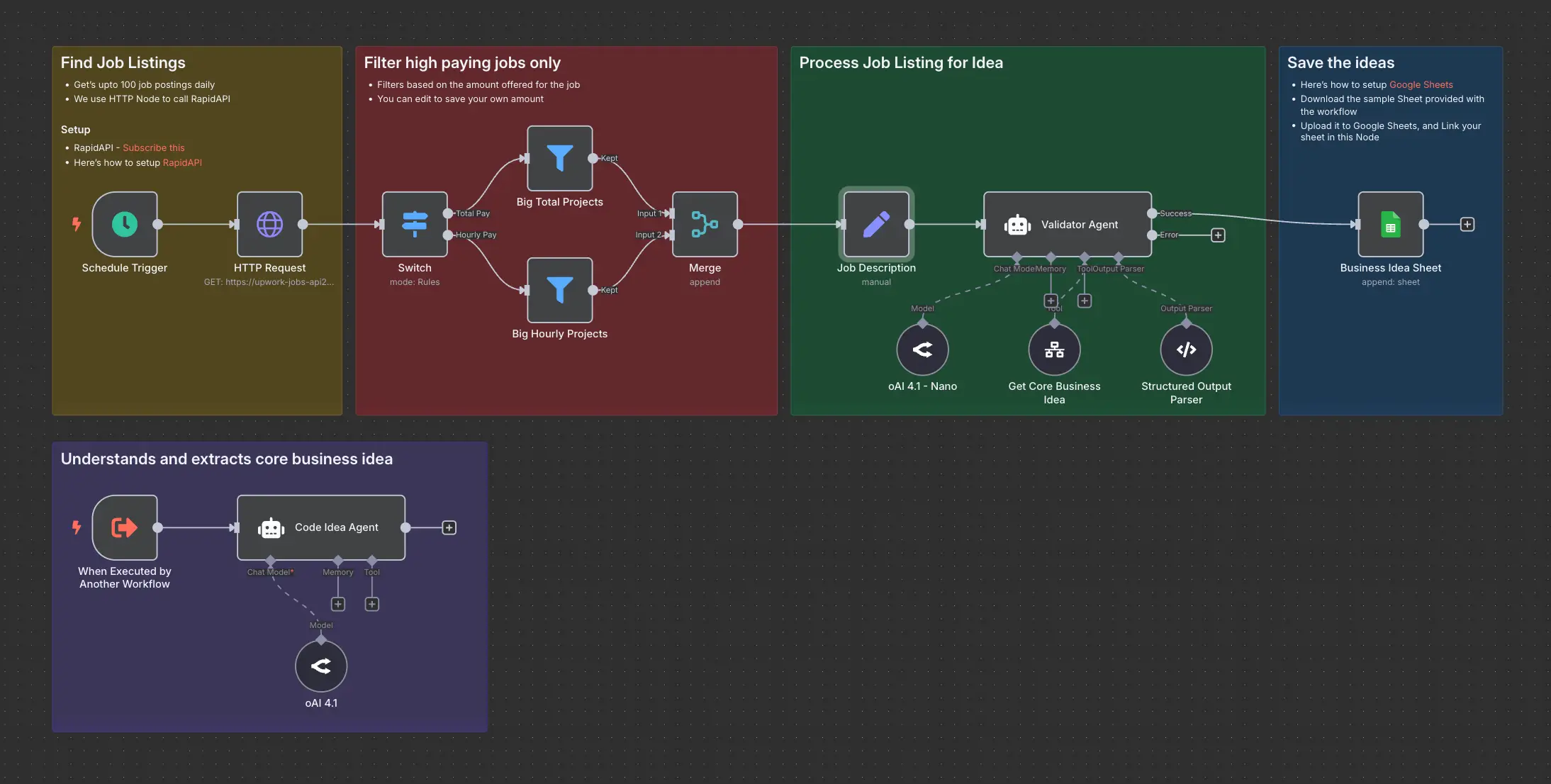
Daily Validated Business Ideas using n8n and Upwork
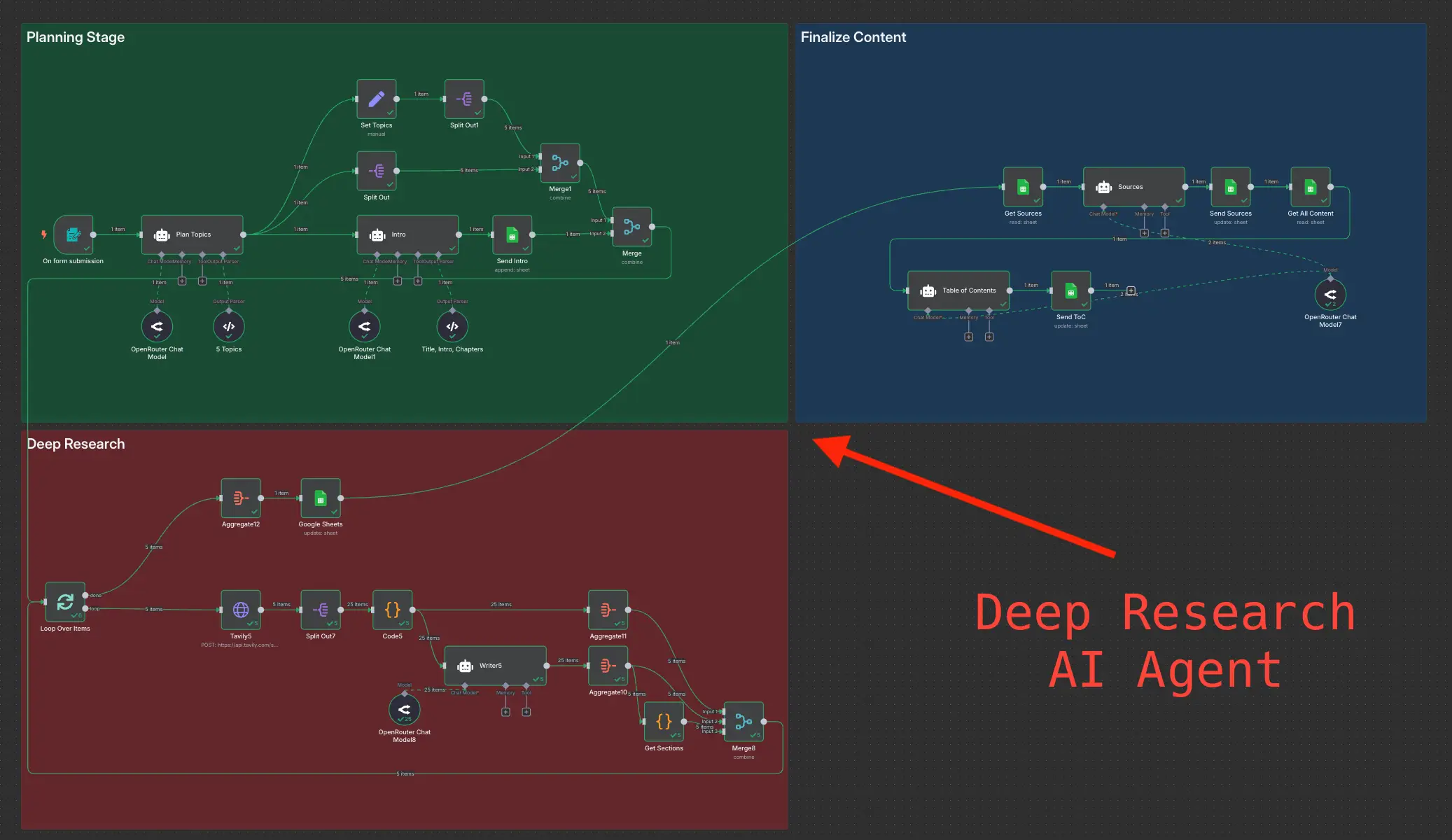
Deep Research using n8n automation to generate report using Tavily