WhatsApp Business API Pricing 2026: October Audit Guide


Table of Contents
- Introduction
- What is changing in WhatsApp Business API pricing in 2026?
- Why will WhatsApp automation costs spike on October 1, 2026?
- What did Meta's July 2026 update change for small businesses?
- How should you audit WhatsApp message volume before October?
- Which WhatsApp flows should you automate versus keep human?
- How can Claude routing cut your WhatsApp automation cost?
- What daily and weekly checklists should small teams run now?
- When should you book a roadmap call instead of guessing?
- Frequently Asked Questions (FAQs)
Introduction
If you built WhatsApp automation in 2024 or 2025, your cost model probably assumed two things: customer service replies inside the 24-hour window were free, and utility templates sent during that same window cost nothing. That assumption breaks on October 1, 2026.
Meta is not rolling back WhatsApp. It is rolling back the free tier that made aggressive bot-first support feel cheap. WhatsApp Business API pricing 2026 now has three separate bill shock dates: July rate shifts in select markets, August token billing for Meta Business Agent, and October charges on service messages plus in-window utility templates that have been free for months.
This guide is for founders and ops leads managing WhatsApp automation cost small business budgets. You get a pricing timeline, a volume audit, an automate-vs-human matrix, and Claude routing to cut message count before October.
What is changing in WhatsApp Business API pricing in 2026?
WhatsApp Business API pricing in 2026 is moving from conversation bundles toward per-message and per-token billing, with the biggest small-business impact landing when free service and in-window utility tiers end October 1.
The platform still organizes traffic into marketing, utility, authentication, and service categories. Marketing templates remain the most expensive per message. Authentication carries its own rates, with premium authentication-international tiers in selected markets. Utility covers transactional updates like shipping notices and appointment reminders. Service covers non-template replies when a customer writes in and your team or bot answers.
What changed in the second half of 2026 is who pays for what, and how:
| Date | Change | Small-business impact |
|---|---|---|
| July 1, 2026 | Per-message rate updates in eight markets; standalone marketing rates in Italy, Spain, Poland, UK | Utility and auth costs rise in Hong Kong, Hungary, Poland, Romania, Qatar, Singapore, and others |
| July 1, 2026 | Meta Business Agent Platform launches | New AI reply path with separate billing category |
| August 1, 2026 | Meta Business Agent billed per token ($2 per 1M tokens) | Roughly 4-5 cents per AI reply when Meta's agent answers |
| October 1, 2026 | Service messages start billing per message | Free since November 2024; no volume discounts |
| October 1, 2026 | In-window utility templates start billing | Free since July 1, 2025; charged at utility rates |
If your stack was designed around "reply freely inside 24 hours," October is the month your WhatsApp automation cost line item stops being optional.
For compliance context on how bots must behave on the channel, see WhatsApp AI chatbot rules for D2C compliant custom agents.
Why will WhatsApp automation costs spike on October 1, 2026?
WhatsApp automation costs spike on October 1 because two categories that many bots lean on - service replies and in-window utility templates - start billing at country-specific per-message rates with no volume discount on service.
Support bots send more service messages than teams expect. Every non-template reply counts. A four-message FAQ loop was free in September; in October it is four billable service messages. In-window utility templates for order updates and confirmations were free since July 2025 - each one bills from October 1. Service messages also skip the volume discounts that utility and authentication get, so costs scale linearly with bot verbosity.
Meta's Brazil comparison for 10,000 messages shows service plus third-party AI landing between roughly $268 and $968 depending on complexity, versus $400-$500 for Meta Business Agent. Count your messages before picking a path.
If you are weighing Meta's native agent against a custom Claude stack, read Meta Business Agent versus Claude custom hybrid on WhatsApp before you commit to either billing category.
What did Meta's July 2026 update change for small businesses?
Meta's July 2026 update changed per-message rates in eight markets, opened WABA currency migration APIs for India and Brazil, and made in-app signup generally available - three shifts that affect billing accuracy and list growth, not just sticker price.
Rate updates: Utility and authentication rates changed July 1 in Hong Kong, Hungary, Poland, Romania, Qatar, Singapore, and related markets. Marketing rates shifted in Italy, Spain, Poland, and the UK as Meta moved countries out of bundled "Rest of" pricing. Audit by recipient country, not template name.
Currency migration: WABA currency APIs (live June 1) let eligible India and Brazil accounts switch billing to INR or BRL in two API calls instead of a multi-step flow.
In-app signup GA: Deeplink opt-in from Facebook, Instagram, email, or your site has no signup API cost, but every new subscriber is a future billable conversation. Growth without a cost model turns October surprises into November invoice panic.
How should you audit WhatsApp message volume before October?
Audit WhatsApp message volume by exporting 90 days of traffic, splitting it by category and country, then modeling October bills using per-message rates for service and in-window utility instead of zero.
- Pull 90 days of delivered messages by category and country from your BSP or WABA dashboard. Add n8n webhook logging if invoices are your only source today.
- Split service from in-window utility - non-template replies versus utility templates inside the 24-hour window. Teams often lump both as "support."
- Flag out-of-window utility already billing today; consolidate or move low-urgency pushes to email.
- Model October by multiplying service and in-window utility counts by per-country rates (Meta publishes October service rates by September 1). The delta is your spike.
| Audit field | What to capture | Why it matters |
|---|---|---|
| Service messages / month | Non-template replies by country | New billable category Oct 1, no volume tiers |
| In-window utility / month | Template deliveries inside CSW | Was free since Jul 2025 |
| Marketing / month | Outbound promotional templates | Already billed; check July rate changes |
| Authentication / month | OTP and login codes | Volume tiers may help; watch intl premium |
| Avg messages per resolved ticket | Service + utility per conversation | Shows bot verbosity tax |
Pair this audit with a broader stack review from AI automation audit and readiness assessment if WhatsApp is one of five channels nobody has mapped end to end.
Which WhatsApp flows should you automate versus keep human?
Automate high-volume, low-risk flows inside the customer service window; keep humans on exceptions, refunds, negotiations, and anything that currently takes more than two bot messages to resolve.
| Flow | Automate? | Why |
|---|---|---|
| First-touch ack + one qualifying question | Yes | One message beats three greetings |
| Order status / tracking link | Yes | Single utility template, no thread |
| FAQ (hours, returns, service area) | Yes | One reply plus escalation option |
| Lead qualification | Yes | CRM fields before human; see time-to-lead patterns |
| Refunds, disputes, custom quotes | No | Wrong auto-promise costs more than messages |
| Angry complaints | No | Judgment beats speed |
| Menu-tree bots (new message per branch) | Reduce | Each branch is a billable service message |
| Duplicate WhatsApp + SMS + email alerts | Reduce | Pick one channel for non-urgent updates |
Use tool sprawl mapping and ranked build order to decide whether your WhatsApp bot is phase-one revenue infrastructure or a phase-three nice-to-have you should simplify before October.
How can Claude routing cut your WhatsApp automation cost?
Claude routing cuts WhatsApp automation cost by classifying each inbound message, choosing the cheapest valid response path, and stopping bots from sending messages that do not change the outcome.
When a webhook fires, Claude (Haiku for volume, Sonnet for high-value threads) labels intent and picks a path:
| Intent | Preferred path | Billing category |
|---|---|---|
| FAQ | One service reply or approved template | Service (billable Oct 1) |
| Order status | Single utility template with tracking link | In-window utility (billable Oct 1) |
| Complaint | Human queue with AI-drafted summary | Minimize bot messages |
| Sales lead | Qualify in one or two messages, then human | Service, but capped |
| Spam / wrong number | No reply or single close | Avoid unnecessary sends |
Cap at two bot messages per thread, then escalate. Choose your AI bill: Meta Business Agent (per token from August 1), third-party AI on service messages (model cost plus Meta per-message fee from October), or hybrid Claude classify-and-draft with human send on high-stakes threads. The hybrid path in Meta Business Agent versus Claude custom hybrid usually wins on CRM control.
Router prompt:
You are a WhatsApp message router for a small business. Given the inbound message and optional thread history, return JSON only:
{
  "intent": "faq|transactional|complaint|sales|spam|unknown",
  "confidence": 0.0-1.0,
  "suggested_path": "auto_reply|utility_template|human_escalation|no_reply",
  "max_bot_messages": 1 or 2,
  "reason": "one sentence"
}
Rules: prefer single-message resolution; never promise refunds; escalate complaints with anger or legal language immediately.
Wire this in n8n between your WhatsApp webhook and send node. Log every routing decision so you can reconcile message counts against your October model.
What daily and weekly checklists should small teams run now?
Run a lightweight daily message-count check and a deeper weekly audit until October 1, then keep both after pricing changes land so drift does not recreate the surprise.
Daily (5 min): Yesterday's message count by category; flag any flow sending 3+ service messages per ticket; block new sequences without an owner sign-off.
Weekly (30 min): Export seven-day counts by country; compare to October model; consolidate one high-volume bot flow; verify marketing sends against opt-in lists.
Before September 1: Download official October service rates; re-run audit; decide per flow: keep, compress, human-first, or retire; evaluate INR/BRL currency migration if eligible.
After October 1: Compare first invoice to model; set per-category budgets with 80% alerts; revisit Haiku vs Sonnet routing if AI plus Meta fees exceed target cost per resolution.
When should you book a roadmap call instead of guessing?
Book a roadmap call when your October model shows a meaningful bill increase, you run more than one automated WhatsApp flow nobody owns, or you cannot trace message volume back to a specific workflow.
Book a 45-minute roadmap call when service plus in-window utility will exceed 20% of current spend, you are choosing between Meta Business Agent and a custom Claude stack without unit economics, or you need a ranked 30-day plan for n8n wiring and human handoff points.
Frequently asked questions
Quick answers on the topics covered in this article.
WhatsApp Business API pricing in 2026 charges per message (or per token for Meta Business Agent) by category and country. Marketing, utility, authentication, and service each have separate rates. The largest change for small businesses is that service messages and in-window utility templates become billable starting October 1, 2026.
Costs spike because Meta ends free service messages (free since November 2024) and free utility templates inside the 24-hour customer service window (free since July 2025). Bots that send multiple support replies per ticket will see linear cost increases.
Meta committed to publishing exact October service rates by September 1, 2026. Service messages will bill at the same per-message rate as utility and authentication templates in the recipient's country, without volume discounts.
Meta Business Agent is Meta's native AI for WhatsApp replies, launched July 1, 2026. From August 1, 2026 it bills at $2 per million tokens, roughly 4-5 cents per typical reply. It is a separate category from service messages.
It depends on conversation length and your AI provider's rates. Meta's Brazil example shows service messages with cheap third-party AI can cost less on simple queries, while Meta Business Agent can be cheaper on long troubleshooting threads. Run your own volume math.
Export 90 days of delivered messages by category and country. Split service messages from in-window utility templates. Count average messages per resolved ticket. Multiply October-eligible volumes by published per-message rates and compare to today's bill.
Automate first-touch acknowledgment, order status, FAQs, and lead qualification - but only if you can resolve them in one or two messages. Keep humans on refunds, complaints, custom quotes, and high-stakes negotiations.
Claude classifies inbound intent, picks the cheapest valid response path, caps bot messages per thread, and escalates before a conversation turns into four or five billable service replies. Use Haiku for classification and Sonnet only when needed.
July 1, 2026 updates hit utility and authentication rates in eight markets including Singapore, Poland, and Qatar, plus marketing rates in Italy, Spain, Poland, and the UK. Check Meta's pricing calendar if you message customers in those countries.
Get help when October modeling shows a significant increase, message counts do not match across tools, or you must choose between Meta Business Agent, custom AI, and human support without clear unit economics. A roadmap call turns the audit into a prioritized 30-day plan.
Share this article
Related workflows
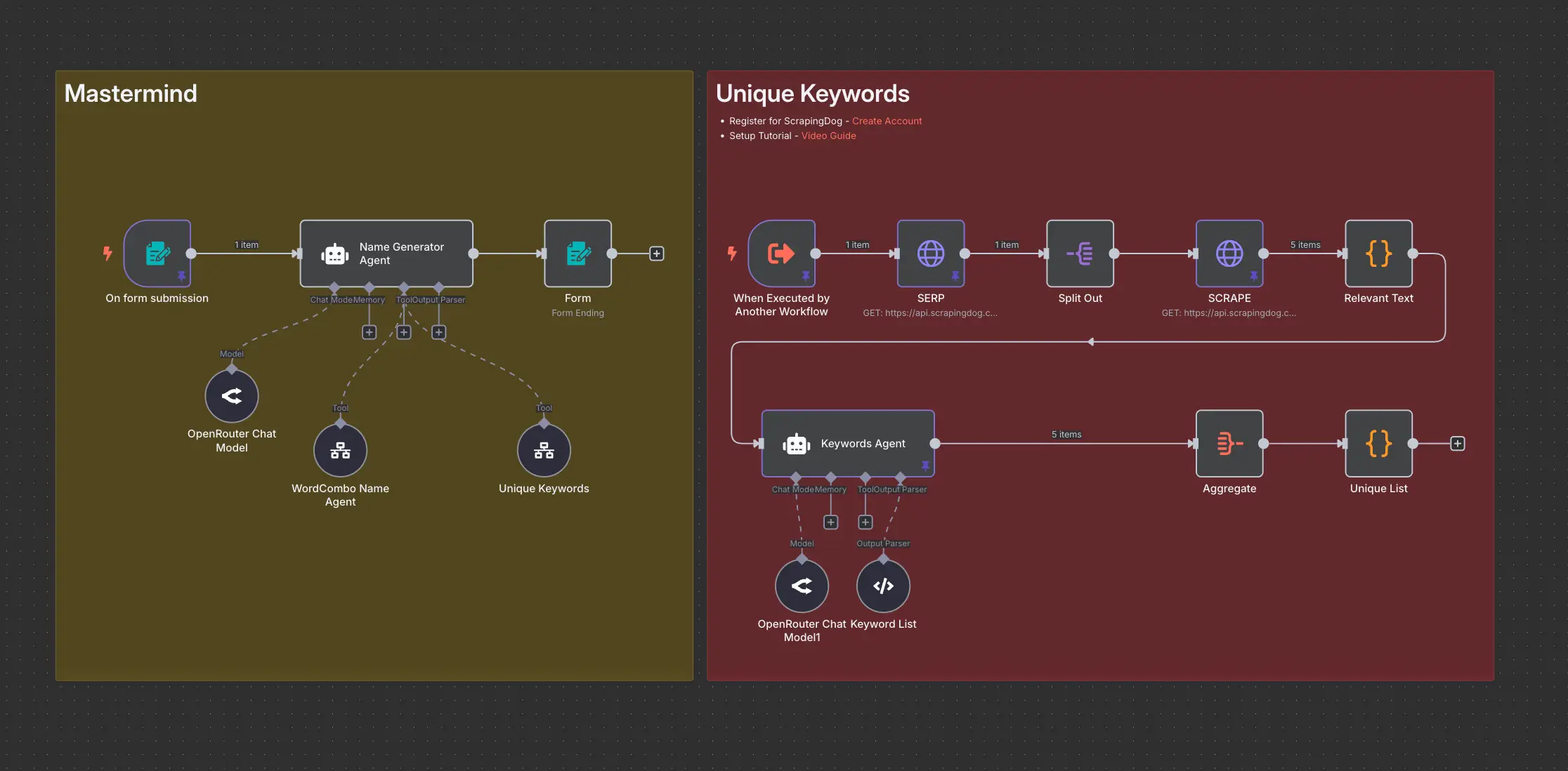
Domain Name Generator n8n workflow using ScrapingDog
Daily Validated Business Ideas using n8n and Upwork