Why the Next $100M Software Companies Will Run on Skills, Not

Table of Contents
- Introduction
- What is the skills era and why is it replacing traditional SaaS?
- How do AI skills make expertise portable and executable?
- Who are the new builders in the skills economy?
- Why will skills capture more value than traditional software?
- How do distribution and defensibility work in the skills era?
- How are skills-based businesses monetized?
- What does building a skills-based company look like in practice?
- What should existing software companies do about the skills shift?
- Frequently Asked Questions (FAQs)
Introduction
The way we value software is changing. For over a decade, success in tech meant building a product, exposing an API, and scaling through seats and features. Today, the unit of value is shifting from applications to something smaller and more precise: skills. AI-powered workflows that encode judgment, take defined inputs, and produce reliable outcomes are becoming the building blocks of how work gets done. Understanding this shift is critical for anyone building, investing in, or adopting software.
This article explores why the next wave of hundred-million-dollar software companies will look different from traditional SaaS. We will cover what the skills era is, how it replaces the old model, who is building in it, and how distribution, defensibility, and business models are evolving. The goal is to give you a clear picture of where value is moving and how to position for it.
What is the skills era and why is it replacing traditional SaaS?
The skills era is the shift from valuing software as a product you operate to valuing it as a capability you invoke. Traditional SaaS scaled by bottling functions: payments, messaging, search, analytics. You built a product, exposed an API, and became infrastructure. Distribution meant getting embedded in as many stacks as possible. That model rewarded companies that owned the pipes.
Today, models turn text and intent into behavior. You can describe a workflow in plain language, attach a small amount of code or configuration, and an agent executes it across multiple tools. What once required a full application with dashboards and onboarding can now be triggered with a single command or integration. The product surface shrinks while the leverage expands.
Traditional SaaS was not designed for this. Multitenant applications built for human-in-the-loop workflows are being forced to re-architect for AI. The industry is splitting into AI-enabled SaaS (AI bolted onto existing products) and native-AI systems built for agents and automation from the ground up. Even then, the real shift is toward discrete, composable skills that can be orchestrated together rather than one big platform. The skills era is replacing traditional SaaS because the unit of value has moved from "the application" to "the repeatable pattern that produces an outcome."
How do AI skills make expertise portable and executable?
A skill, in this context, is a packaged workflow that encodes judgment. It has structured instructions, defined inputs and outputs, and the ability to call tools or run code. It represents a repeatable way to approach a task. When someone invokes a skill for SEO audit or lead qualification, they are running a structured decision pattern that executes consistently every time. That consistency is the product.
Skills make expertise portable. Knowledge that used to live only in people's heads or in proprietary internal tools can be extracted, encoded into a skill, and made available across the network. A recruiting strategy developed over years can become a skill that any company can invoke. A diagnostic framework from a top hospital can be encoded and run in resource-limited settings. Expertise that was sticky and expensive to replicate becomes something you can call on demand.
They also make expertise executable at scale. Traditional software has to be learned; skills can be executed. When you deploy a CRM, you need training and change management. When you invoke a skill, it runs its logic immediately. You get the benefit of expertise without the same learning curve. Because skills are discrete and composable, you can swap them, test them, and refine them without re-architecting the whole system. Improvement becomes continuous instead of tied to big release cycles.
Who are the new builders in the skills economy?
Three builder types are emerging where much of the value will concentrate.
Skill encoders take domain expertise and package it into reliable, repeatable skills. They might be former operators encoding sourcing workflows, analysts encoding due-diligence frameworks, or specialists encoding clinical or legal reasoning. They do not necessarily build the underlying AI infrastructure; they use existing models and agents and focus on translating human judgment into executable logic. The economic upside is high because domain expertise is scarce and encoding it well is hard.
Curators and marketplaces aggregate and organize skills, handle quality, versioning, and discovery. In a world with many available skills, finding the right one, verifying quality, and knowing when an update breaks your workflow become critical. Marketplace platforms address these problems. They operate at the level of capabilities rather than full applications and will control a large share of distribution and revenue.
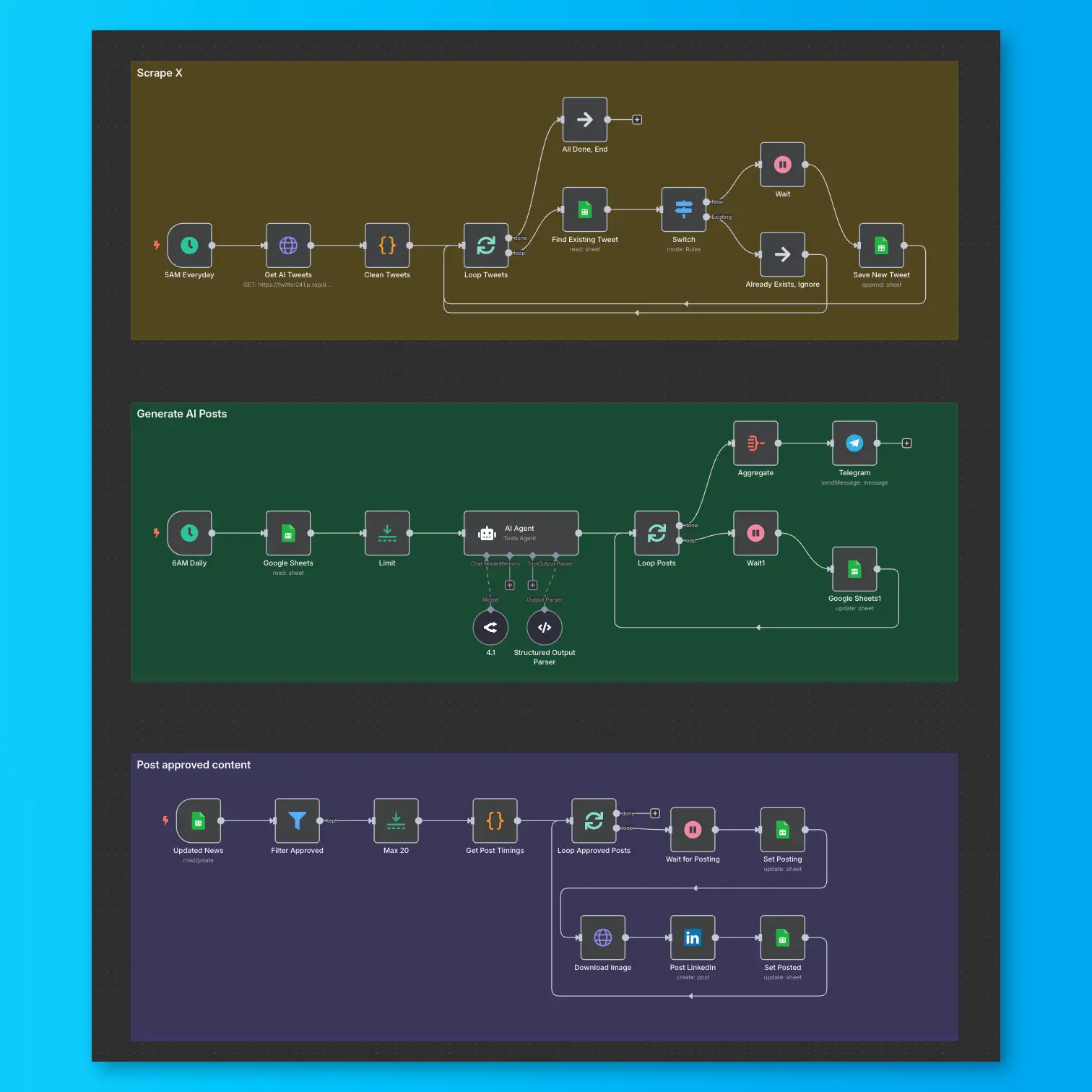
Orchestration and integration platforms connect skills and provide governance, observability, and reliability. As organizations compose many skills into workflows, they need platforms that handle versioning, errors, audit trails, and performance. Reliability and compliance live here. Organizations will depend on a small number of orchestration layers, making them defensible and capital-efficient. Tools like n8n, Zapier, and Make are early examples of this layer.
Why will skills capture more value than traditional software?
Several structural reasons favor skills over traditional software.
Integration friction drops. A traditional SaaS product is often a discrete tool you bolt on. Skills plug in at the orchestration layer. If you have already standardized on a workflow platform, adding a new skill is often configuration, not a long implementation.
Pricing can align with value. Traditional SaaS charges per seat or per account, which fits poorly with AI-driven usage. Skills can be priced per execution, per outcome, or based on value delivered. Vendors and customers align around results instead of headcount.
Improvement is continuous. In traditional SaaS, new capabilities arrive in quarterly releases. With skills, as the underlying model or logic improves, you benefit without a formal upgrade. Feedback loops tighten and product-market fit can improve faster.
Team structure can be leaner. A traditional SaaS company needs product, design, sales, and implementation spread across the org. A skill encoder needs deep domain expertise and strong AI or automation engineering. The team can be narrower and more focused on the one thing that creates value: encoding and improving the skill.
How do distribution and defensibility work in the skills era?
Distribution in the skills era runs through orchestration platforms. If your organization uses a workflow or automation platform, the skills you use are likely those available in that platform's ecosystem. As you build more workflows on that platform, you accumulate dependencies. Switching costs move up the stack: individual skills are easy to swap, but the platform that composes them becomes sticky.
Defensibility comes from a few places. First, outcome quality: a skill that produces reliably better results in a specific domain is defensible because it rests on domain knowledge and continuous optimization that is hard to copy. Second, data: skills that learn from usage get better over time and become harder to replicate. Third, network effects in marketplaces: more skills and more usage make the marketplace more valuable and improve discovery and recommendations.
Trust matters more as skills handle more critical work. Teams will care about authorship, assumptions, data access, auditability, versioning, and governance. The visible product may be a simple command or integration, but the strategic weight sits in how skills are built, verified, and operated.
How are skills-based businesses monetized?
Business models are shifting from seats to usage and outcomes.
Per-execution pricing is natural for skills: you pay each time a skill runs, similar to cloud APIs. This fits episodic or volume-driven use and aligns vendor success with customer usage.
Outcome-based pricing is emerging where the value is measurable. A skill might take a percentage of placement fees, deal value, or savings. This is more aggressive but possible when outputs are clear and attributable.
Data and intelligence can be monetized separately. As skills aggregate usage data, insights about trends, best practices, and signals become valuable. Marketplaces can sell this intelligence in addition to the skills themselves.
Orchestration and governance services can charge subscription or platform fees. As organizations depend on reliable, auditable workflows, they will pay for platforms that handle versioning, error recovery, and compliance.
These models can combine: per-execution for broad skills, outcome-based fees for high-impact ones, and subscriptions for the orchestration and governance layer.
What does building a skills-based company look like in practice?
Consider a company built in the skills era. A founder sees that venture firms spend too much time on early-stage diligence: reading decks, evaluating teams, running first-pass models. They decide to encode venture due diligence as a skill instead of building another VC software tool.
They work with experienced investors to capture real decision logic: what signals predict success, what red flags they weight, what patterns they see in founders and markets. They encode this into a skill that ingests a pitch deck, financial model, and context and outputs a structured evaluation: fit with fund theses, risk areas, and questions for deeper diligence.
They deploy the skill through an orchestration marketplace. VC firms that already use that platform can add the skill to their process. Junior analysts get consistent first-pass screening; humans focus on higher-value judgment. As firms use the skill and give feedback, the skill improves. The company can also publish aggregated insights (e.g., what types of companies are getting funded, what backgrounds correlate with success) as a separate product.
The business scales without a large sales force, complex UI, or heavy implementations. It scales through a platform that already has the right users and a clear distribution mechanism. Revenue can reach meaningful scale not by building a monolithic product but by creating a specialized skill invoked millions of times a year.
What should existing software companies do about the skills shift?
In the near term, most companies will feel the shift only gradually. AI will remain one tool among many. But in domains where expertise and outcomes dominate (recruiting, healthcare, law, finance, logistics), the pressure to decompose work into skills will grow.
Incumbent SaaS vendors face a strategic choice. One path is to decompose the platform into skills and compete inside orchestration marketplaces, accepting possible cannibalization. Another is to turn the platform into an orchestration hub that connects specialized skills and provides governance. The latter shifts the company from application vendor to infrastructure vendor: less like a single-product SaaS, more like a layer where skills are composed, outcomes are tracked, and compliance is assured.
The companies that navigate this well will be those that make expertise legible, executable, and governable. The next wave of software value will go to those who encode the right patterns, own the right defaults, and run them where work already happens.
Frequently asked questions
Quick answers on the topics covered in this article.
A skill is a packaged workflow that encodes judgment and expertise. It has defined inputs and outputs, structured instructions, and the ability to call tools or run code. When invoked, it executes a repeatable decision pattern so that the same task is approached consistently every time. The consistency and quality of that execution are the product.
Traditional SaaS sold applications and features you operated inside. The skills era sells capabilities you invoke. Value moves from "the product you use" to "the outcome a skill delivers." Distribution shifts from seats and integrations to becoming the default pattern that agents and teams use inside existing workflows. Pricing and defensibility align more with usage and outcomes than with headcount and feature lists.
Skill encoders are people who take domain expertise and turn it into reliable, executable skills. They might be former operators, analysts, or specialists who work with existing AI and automation infrastructure to encode how experts think and decide. They matter because domain expertise is scarce; encoding it well creates high leverage and defensibility.
Orchestration platforms connect multiple skills and provide governance, observability, versioning, and reliability. As organizations compose many skills into workflows, they need a layer that manages how those skills run together, how they are updated, and how compliance and audit are handled. Tools like n8n, Zapier, and Make are examples. Lock-in and value tend to concentrate at this layer.
Skills-based businesses can charge per execution (like API usage), per outcome (e.g., a share of value delivered), or through subscriptions for orchestration and governance. They can also monetize aggregated data and intelligence from usage. Often these models are combined: usage-based for the skill, subscription for the platform.
Lower integration friction, better alignment of pricing with value, continuous improvement instead of big releases, and leaner teams focused on encoding expertise all favor skill-based businesses. Distribution through orchestration marketplaces and defensibility through outcome quality and data create winner-take-most dynamics in specific domains. The companies that capture this will encode the right expertise and own the default patterns in their space.
They can either decompose into skills and compete in marketplaces or position as orchestration hubs that connect and govern skills. The latter often means shifting from application vendor to infrastructure vendor: providing the layer where skills are composed, outcomes are tracked, and compliance is assured. The transition will be uneven, but in expertise-heavy domains the pressure to move will grow.
Expertise is captured through structured instructions, decision logic, and tool use that reflect how domain experts work. That encoding is then deployed as a skill that can be invoked by anyone with access to the right platform. Portability means the same expertise can run in many contexts without the original expert being present. Fidelity, adaptability to new contexts, and transparency of decisions are the main challenges to solve.
Defensibility comes from outcome quality (domain-specific excellence that is hard to replicate), data (skills that improve with usage), and network effects in marketplaces (more skills and usage make the platform more valuable). Trust, auditability, and governance also become moats as skills handle more critical work.
The shift is most visible in vertical domains where expertise and outcomes are paramount: recruiting, healthcare, legal, financial services, logistics, and similar fields. Horizontal orchestration platforms are already hosting skills and workflows. The next wave of high-value software companies will likely be those that encode the right expertise and own the default patterns in these domains.
Share this article
Related workflows